What if a house sale falling through is less about a fickle buyer and more about a problem nobody spotted or dealt with soon enough? If you’re wondering why house sales fall through, it helps to know that an accepted offer is only one step in a longer process. In England and Wales, either side can usually withdraw before contracts are exchanged, so clear communication and steady progress matter.
It’s understandable to feel unsettled once an offer has been accepted. You may be planning an onward purchase, arranging a move or waiting for an update. Not every delay means the sale is in trouble, but some issues need prompt attention before they affect other plans.
This guide explains common reasons a sale can unravel, from mortgage or survey concerns to chain problems and changing plans. It also shows how to distinguish a genuine warning sign from an ordinary delay, and what to ask when progress stalls. Proactive sales progression can keep responsibilities clear and help you understand what needs to happen next, though it cannot guarantee a sale will complete.
Key Takeaways
- An accepted offer is progress, but the sale is not complete until the transaction reaches completion.
- Understanding why house sales fall through can help you spot risks, from financing concerns to questions raised during a survey.
- A survey finding or delay does not automatically mean the sale is over. Find out what the concern means and what needs to happen next.
- If progress stalls, clarify what is delayed, who is responsible for the next step and when you will receive an update.
- Proactive sales progression can make communication and responsibilities clearer, even though no one can guarantee a sale will complete.
Why an accepted offer does not mean your house sale is secure
An accepted offer is meaningful progress. You and the buyer have agreed a price, and the sale can move into its legal and practical stages. However, several steps remain before ownership changes hands. Stay engaged with the process rather than treating your move as settled too soon.
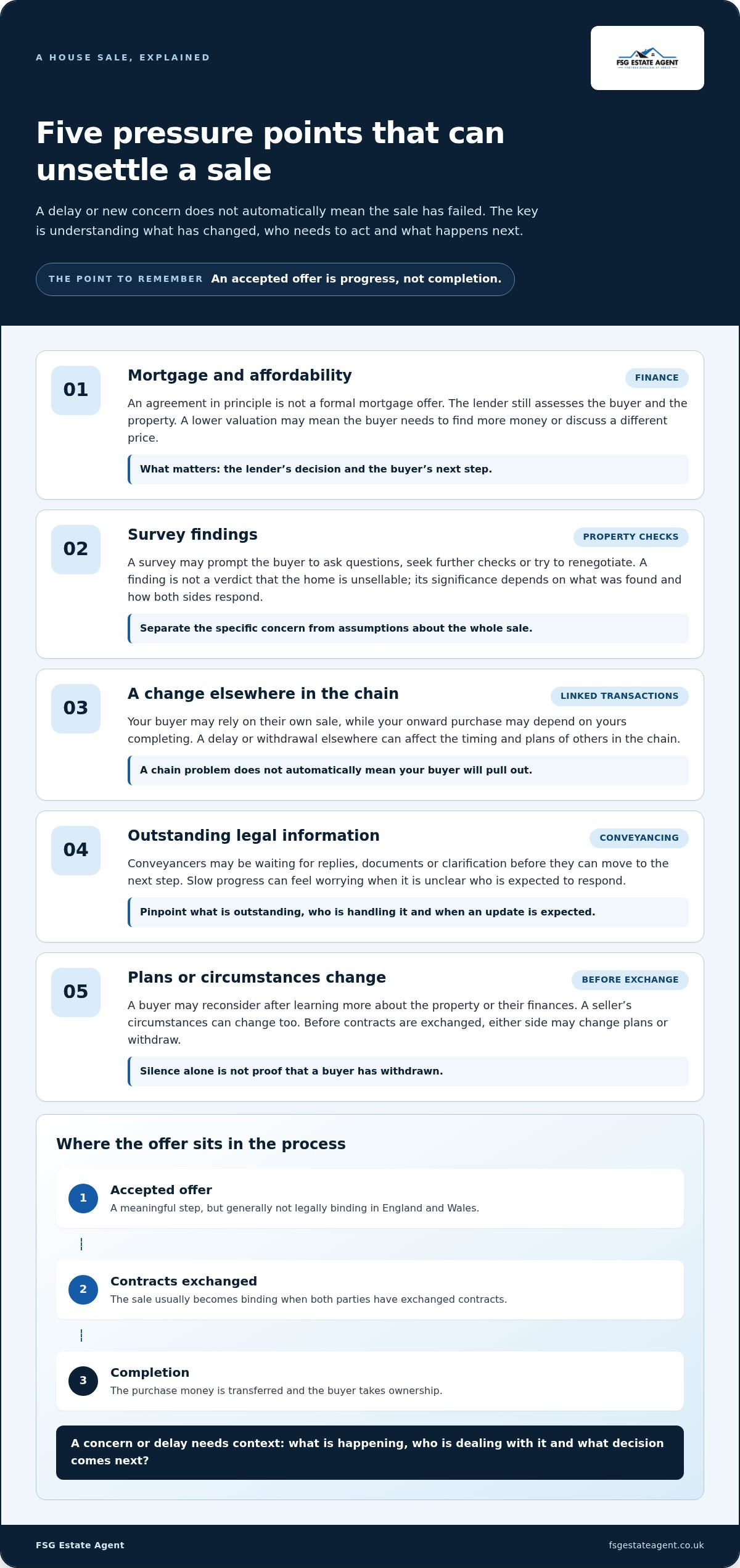
In England and Wales, an offer on a property is generally not legally binding. The sale usually becomes binding when both parties have exchanged contracts. Completion comes later, when the purchase money is transferred and the buyer takes ownership. A sale that ends before completion is commonly described as having “fallen through”. If a party fails to complete after contracts have been exchanged, the legal position is different and can have serious consequences. Ask your conveyancer for advice about your circumstances.
What does an accepted offer mean for a seller?
After you accept an offer, you and the buyer can instruct conveyancers, provide information and work towards exchange. The buyer may arrange a survey and mortgage, while the conveyancers carry out legal checks and raise questions. These tasks often happen at the same time, but each depends on people providing information and making decisions.
Before exchange, either side may change their plans or withdraw. A buyer might reconsider after learning more about the property or their finances. A seller’s circumstances can change too. An accepted offer is a positive step, but it does not remove every risk before completion.
Why can a sale unravel even when both sides seem committed?
Commitment matters, but it cannot control every part of a transaction. A buyer’s mortgage offer may be delayed, their circumstances may change, or new information may prompt further questions. A survey can reveal an issue the buyer wants to understand before proceeding. A lender’s valuation may also affect how much they are prepared to lend. None of these developments automatically ends a sale, but each can affect the buyer’s plans or slow progress.
Your own plans may depend on other transactions. If you’re buying another home, your onward purchase may rely on your buyer completing, while the seller of the property you want may be relying on their own purchase. A delay or withdrawal elsewhere in that chain can affect your move, even if you and your buyer remain ready to proceed.
Property sales involve several parties, documents and stages. The complexities of real estate transactions help explain why progress depends on more than the agreement between buyer and seller. Conveyancers handle legal work, lenders make lending decisions, and buyers and sellers need to respond to questions and requests.
There is no single answer to why house sales fall through, and an accepted offer alone cannot predict the outcome. The risks vary from one transaction to another. Regular, specific updates help you understand what is happening, who needs to act and whether a delay is part of the process or needs attention.
Why house sales fall through at different stages
Problems can surface at any point between agreeing a sale and completion. Some appear early, when the buyer arranges finance. Others emerge after a survey or while conveyancers are reviewing property information. The order varies, and a delay or concern does not automatically mean the sale will fail. To work out what needs attention, focus on the specific issue, the person handling it and the next decision required.
Early-stage risks: finance, affordability and buyer readiness
A buyer may have an agreement in principle, but this is not the same as a formal mortgage offer. The lender still needs to assess the application and the property. Its checks may affect how much the buyer can borrow or whether it is willing to lend on the expected terms.
The buyer’s finances can change as well. A change in income, existing commitments or other circumstances may affect affordability. If a lender values the property below the agreed price, the buyer may need to find more money or discuss a different price. That can prompt a conversation, but it does not mean the sale is certain to collapse.
As the seller, you may not hear the full reason straight away. The buyer might be waiting for a lender’s decision, weighing up options or deciding what they are comfortable with. Ask your estate agent what update has been received and what the next step is. Silence alone is not proof that the buyer has withdrawn.
Later risks: surveys, chains and transaction delays
A survey can raise questions about a property’s condition. The buyer may ask for more information, seek further checks or try to renegotiate. A finding is not a verdict that your home is unsellable. Its significance depends on what was found, the buyer’s view and whether both sides can agree how to proceed.
A property chain creates another kind of uncertainty. Your buyer may be relying on their own sale, while your onward purchase may depend on you completing. If a linked transaction is delayed or ends, the timing or plans of others in the chain can change too. A problem elsewhere does not always mean your buyer will pull out, so ask how it affects your specific position in the chain.
Information exchange can take time. Conveyancers may be waiting for replies, documents or clarification before moving to the next step. Slow progress can feel worrying, particularly when you do not know who is expected to act. An unanswered enquiry is not, by itself, a failed sale. Ask what information is outstanding, who is dealing with it and when an update is expected.
The National Association of REALTORS® explains the Real Estate Settlement Procedures Act (RESPA) guidelines, which relate to the US system, not property sales in England and Wales. For your sale, your conveyancer can advise on legal questions, while your estate agent can help keep communication and practical next steps visible.
There is no fixed point at which every sale becomes safe. Understanding why house sales fall through means looking at the actual issue, who needs to respond and whether there is a practical way forward. If you’re selling in Twickenham, Richmond or Chiswick, personal support with your property sale can help keep updates and responsibilities clear.
Myths about why house sales fall through, and what really matters
When a sale stalls, it is easy to settle on one explanation: the buyer got cold feet. Sometimes a buyer does change their mind. But that does not explain every failed sale, and guessing can make a difficult situation feel more personal than it is. Separate what you know from what you assume, then find out what has actually changed.
Myth: a buyer changing their mind is always the main cause
A buyer may withdraw after a change in finances, a lender’s decision, new information about the property or a delay affecting their own plans. A chain can also be disrupted by a separate buyer or seller. Sometimes several pressures build together, so there may not be one simple cause or one person to blame.
A fall-through can result from connected risks, not one isolated event. If the reason is unclear, do not treat a short update or a quiet spell as a complete explanation. Ask what has happened, what the buyer or their conveyancer has communicated and whether a specific decision is still to be made. Clear information helps you respond to the actual problem rather than an assumption.
Changing circumstances can affect sellers too. An onward purchase, work or family plans may shift during a transaction. That does not automatically mean either side has acted carelessly. It does mean that early, direct communication can help everyone understand what has changed and what options are being considered.
Myth: a survey problem means the sale is doomed
A survey finding, a buyer’s reaction to it and a decision to withdraw are three different things. A report may raise a question the buyer wants clarified. They might seek more information, discuss the finding with their conveyancer or propose revised terms. You can consider the request and decide how to respond. There is no automatic outcome, and no guarantee that both sides will agree.
Keep the focus on the specific finding and the next decision. A concern about one part of a property does not, on its own, prove that the whole home is unsellable. Nor does a buyer asking for a discussion mean the sale has ended. For technical interpretation, rely on the relevant survey professional; for legal implications, speak with your conveyancer.
The same care applies to reassuring signals. An accepted offer, an agreement in principle or a buyer saying they are keen to proceed can all be encouraging. None is a promise that every remaining step will go smoothly or that completion is certain. Treat them as useful updates, not guarantees.
The Consumer Federation of America offers a consumer-focused perspective on the impact of real estate agent practices on transactions. Its discussion is US-focused, so it should not be taken as evidence about the frequency or causes of failed sales in England and Wales. For sellers, the practical point is to expect clear communication and know who is responsible for each next step.
If you’re selling in Twickenham, Richmond or Chiswick, direct, personal support with your property sale can help keep updates and responsibilities clear while you consider what to do next.
What sellers can do when a house sale starts to wobble
A slower update can unsettle you, especially if your own move depends on the sale. Start by finding out what has actually changed. A delayed reply, an unanswered question or a buyer waiting for information is not the same as a confirmed withdrawal. Get clear facts before deciding whether to wait, follow up or rethink your plans.
How to get a clear update when progress slows
Ask your estate agent for a plain-English summary. What is outstanding? Who needs to act next: the buyer, seller, conveyancer, lender or another party? Is anyone waiting for a document or decision? A specific answer helps you distinguish a genuine hold-up from a situation where nobody is sure who should move things forward.
Agree when you will next hear an update, even if the update is simply that there has been no change. Keep important decisions and agreed actions in writing so you can refer back to what was discussed. Your conveyancer can explain legal questions; your estate agent can help keep communication between the parties clear.
- Identify the exact point where progress has paused.
- Confirm who is responsible for the next action.
- Agree a date to follow up and record any decisions.
This approach gives everyone a clear next step without treating every quiet spell as a warning. It also helps you see whether the same issue remains unresolved or a new concern has emerged.
What to consider if the buyer withdraws
If the buyer confirms they are pulling out, take time to understand why before making decisions. The reason may be useful, but it may not tell the whole story. Ask your agent to explain what the buyer has communicated and whether their feedback points to anything you can address. Avoid rushing into a price change based on an assumption.
Then review the marketing and viewing feedback with your estate agent. Consider whether the description and presentation still reflect the property accurately, and whether viewers have raised similar questions. One buyer’s decision does not automatically mean the property or asking price is the problem. Look for a pattern before deciding what, if anything, to adjust.
If you’re preparing to put your home back on the market, this guide to preparing for a residential property sale explains what sellers can expect from the process. Knowing what information and decisions may be needed can help you feel more organised if plans change.
For sellers in Twickenham, Richmond and Chiswick, clear local communication can make it easier to understand how a delay affects your plans and what needs attention next. Understanding why house sales fall through is useful, but so is having one person keep track of updates and responsibilities. Talk with Fran about your property sale for personal support and proactive sales progression.
How proactive sales progression supports a smoother house sale
Once an offer is accepted, there are still practical steps to track. Sales progression means monitoring those steps, sharing updates and helping you understand what is outstanding. For example, it can clarify whether information has been sent, a question is awaiting a reply or someone needs to confirm what happens next.
An estate agent cannot control a lender’s decision, a conveyancer’s work or another buyer’s plans in a chain. Proactive progression can, however, make delays easier to see and discuss. Clear communication can bring an unanswered question to light sooner, rather than leaving you to wonder whether progress has stopped.
What proactive sales progression looks like in practice
Good progression keeps the focus on clear, useful updates. You should be able to understand what has moved forward, what is still pending and who is expected to act. If a step is taking longer than expected, a direct update can help establish whether someone is waiting for information or whether there is a new concern to address.
Keep the next action specific. “We’re waiting for an update” leaves you guessing. “The buyer’s conveyancer is waiting for a reply, and we’ll follow up on the agreed date” gives you a clearer picture. That does not guarantee a particular outcome, but it gives you a practical point of reference and a better basis for making decisions.
Understanding how to choose an estate agent in Twickenham can help you decide what kind of communication and personal support you want throughout a sale. Consider whether you will know who to speak to and how you will receive updates when a transaction becomes uncertain.
How FSG supports sellers from offer to completion
At FSG Estate Agent, founder Fran works directly with clients throughout the sale process. Professional property marketing presents your home to prospective buyers, buyer negotiation supports the offer stage, and proactive sales progression helps keep track of actions and communication after an offer is accepted. These services form part of a personal approach, so you have a clear point of contact for updates and next steps.
That continuity matters when you need to understand what has happened and what comes next. If you’re selling in Twickenham, Richmond or Chiswick, you can talk to FSG about selling and discuss the support you’d value. Clear progression can make the process easier to follow, even though it cannot promise that every sale will complete.
Move forward with a clearer plan
Your next step is not to expect a perfectly predictable sale. It is to choose a working relationship that keeps you informed and gives you room to make considered decisions. Before your next move, think about what would help you feel confident: clear updates, a named person to speak to and a shared understanding of what happens next.
Understanding why house sales fall through gives you useful context. Support throughout the sale can also make the process easier to manage. FSG’s residential sales service brings professional marketing, buyer negotiation and proactive sales progression together. Founder Fran works directly with clients throughout the sale, helping keep communication personal and next steps clear. Homeowners in Twickenham, Richmond and Chiswick can discuss their plans with a local property expert.
If you’re considering a sale or want to talk through your next move, talk to FSG about your property sale. Get in touch with Fran to discuss your plans and the personal support FSG can provide throughout your sale.
Frequently Asked Questions
Can a house sale fall through after exchange of contracts?
Yes, a sale can fail to complete after exchange, but the position is very different from withdrawing before exchange. The exchanged contract binds the parties, and failing to complete may have contractual consequences. If completion looks uncertain, contact your conveyancer immediately. They can explain the contract terms, relevant deadlines and options for your situation. Do not assume the usual pre-exchange withdrawal process applies.
Is a mortgage agreement in principle enough to stop a house sale falling through?
No. An agreement in principle gives an indication of how much a lender might be willing to lend, but it is not a final mortgage offer. The lender may still assess the buyer’s finances, the property and supporting documents. This is one reason why house sales fall through despite early signs of progress. As a seller, ask your agent for an update, but do not treat an agreement in principle as secured funding.
Do I have to pay solicitor fees if my buyer pulls out?
You may still owe fees for work already completed, even if the purchase does not go ahead. The amount and payment terms depend on your agreement with your conveyancer. Check your client-care documents, then ask the firm to explain any outstanding bill and what work it covers. Fee arrangements differ, so another seller’s experience will not necessarily apply to you. Your estate agent cannot determine your legal fees.
Can I accept a new offer after a house sale falls through?
Yes, once the earlier transaction has ended, you can consider another offer. Before deciding, review what the first buyer said and whether their feedback points to anything worth addressing. You might discuss changes to your marketing or asking price with your agent, but the right choice depends on your circumstances. If you’re selling in Twickenham, Richmond or Chiswick, your agent can help you assess the feedback and plan your next steps.
Will a failed house purchase affect my credit score?
A failed transaction does not automatically change your credit score. However, credit checks linked to a mortgage application may appear on your credit file, and their effect depends on the type of checks and your wider financial history. If you’re concerned, review your credit report and speak to your lender or a qualified financial adviser. Do not assume the failed purchase alone determines your credit position.
What happens to my deposit if a purchase does not complete after exchange?
The outcome depends on the contract, why completion did not happen and what legal steps follow. Your deposit may be at risk under the contract, but the position depends on the details of the transaction. Contact your conveyancer immediately if completion is in doubt. They can explain the relevant contract terms, deadlines and options for your circumstances. Do not rely on general guidance to decide what may happen to your deposit.