What if your terrace’s strongest selling point isn’t an expensive upgrade, but how clearly its character and practical layout come across? Selling a terraced house in Chiswick starts with understanding what buyers may value in your particular home, then presenting it carefully and setting a realistic price.
It’s understandable to feel unsure about where to begin. Should you redecorate, how should you judge the asking price, and who will keep you informed once an offer is accepted? A clear plan makes each decision easier and can help reduce avoidable stress.
This guide explains how to prepare your home, position it for likely buyers and approach pricing using relevant local evidence. It also covers professional marketing, viewings, negotiation and the steps that follow an offer. With a property-specific valuation, direct communication and active sales progression, you can understand what to expect from valuation through to completion and make informed choices along the way.
Key Takeaways
- Build a selling plan around your terrace’s layout, condition and presentation, rather than relying on a one-size-fits-all checklist.
- Use relevant comparable sales and your home’s specific features to inform an asking price, not as a promise of the final sale price.
- Prepare in manageable steps: declutter, make rooms easy to understand and gather accurate details about the property.
- When selling a terraced house in Chiswick, compare offers by considering the buyer’s position and stated timescales alongside the amount offered.
- Understand the journey from valuation and marketing to negotiation and completion, with clear communication and active sales progression along the way.
Selling a Terraced House in Chiswick: What Shapes a Strong Sale?
Selling a home brings practical decisions as well as personal change. You’re deciding what to do before marketing, how to describe the property and what price reflects its appeal. A useful plan starts with the house itself, not assumptions about what buyers supposedly want. Selling a terraced house in Chiswick means understanding how your particular home lives, looks and compares with relevant local evidence.
Two terraces can share a street yet offer different advantages. One may have a bright reception room and a compact kitchen; another may have a more flexible layout or better storage. Condition matters too. Separate the features you can show or verify from assumptions about what every local buyer prefers.
Which features of a Chiswick terrace should sellers assess first?
Walk through the house as a viewer might. Notice how the rooms connect, where natural light falls, how much storage is available and whether each space has a clear purpose. Record the condition honestly, along with improvements you’ve made and details you can substantiate. This gives your marketing a sound basis and helps identify practical presentation priorities.
- Note which rooms feel bright and how they relate to one another.
- Check whether storage and circulation are easy to understand.
- List completed improvements accurately, without implying work that wasn’t done.
Don’t assume that costly changes are needed before you go to market. First establish what the property already offers and what might distract from it. If you refer to period details, Bedford Park or a conservation area, verify the specific description and current designation before including it. Accurate wording builds trust; an attractive but unsupported claim can create confusion.
How does local context help shape a sale?
Local context is most useful when it’s specific. Chiswick’s history and geography, including the development of terraced housing in the late nineteenth century, are outlined in this Chiswick, West London overview. That wider background doesn’t establish the age or character of an individual house. Describe your property based on its own details, and verify any neighbourhood reference you plan to use.
For pricing, focus on genuinely comparable completed sales. Look for homes with a similar location, property type, condition and layout, and consider when each sale took place. An asking price is not the same as a completed sale, and a property with a different condition or configuration may be a poor comparison. Current evidence gives the valuation discussion a firmer footing than broad averages or a nearby listing alone.
Transport links, schools and amenities may matter to some prospective buyers, but their relevance depends on the property and the individual buyer. Keep descriptions factual and check local details before using them. Avoid turning a nearby facility into a promise about suitability, convenience or buyer demand.
A property-specific selling plan connects verified features, thoughtful presentation and comparable local sales, so each decision has a clear reason behind it.
How to Value a Terraced House in Chiswick with Confidence
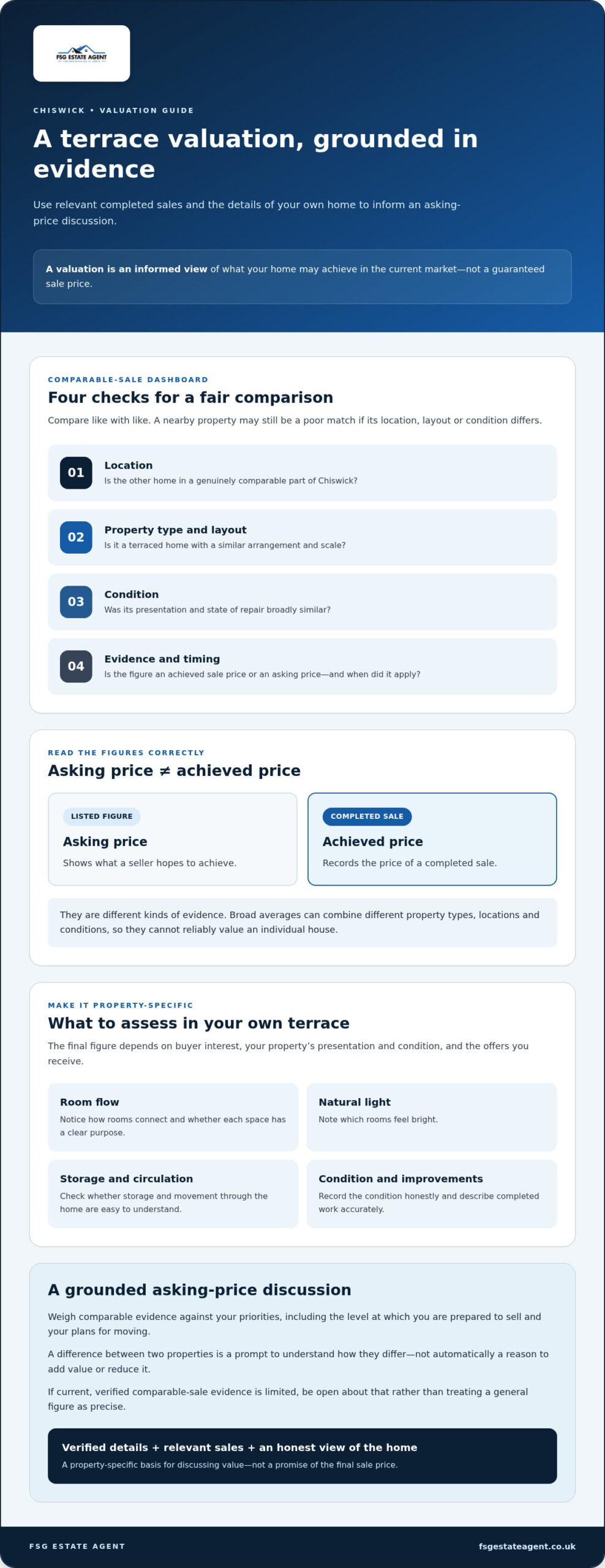
A valuation is an informed view of what your home may achieve in the current market, not a guaranteed sale price. The final figure depends on buyer interest, the property’s presentation and condition, and the offers you receive. For anyone selling a terraced house in Chiswick, the most useful starting point is evidence about genuinely comparable homes, interpreted in light of the property itself.
What evidence can inform a Chiswick terrace valuation?
Look for completed sales of similar terraced homes in a relevant location. Compare sale dates, condition and layout, not just the headline figure. An asking price shows what a seller hopes to achieve; an achieved price records a completed sale. They are different kinds of evidence. RICS guidance explains recognised valuation standards and approaches used by chartered surveyors, but a market valuation still needs to account for the specific home being discussed.
Broad averages can provide background, but they can’t reliably value an individual house. They may combine different property types, locations and conditions. A terrace with a different layout or level of upkeep may not be a fair comparison, even if it is nearby. If current, verified comparable-sale evidence is limited, be open about that rather than treating a general figure as precise.
Use a simple comparison to organise the discussion:
- Location: Is the other home in a genuinely comparable part of Chiswick?
- Property type: Is it a terrace with a similar arrangement and scale?
- Condition: Was its presentation and state of repair broadly similar?
- Evidence: Is the figure an achieved sale price or an asking price, and when did it apply?
Keep the comparison honest. A difference isn’t automatically a reason to add value or reduce it; it’s a prompt to understand how the properties differ. Apply the same care to claims about location or features, and let verified details guide the conversation.
How should sellers think about their asking price?
A reasoned asking-price discussion weighs comparable evidence against your priorities, such as the level at which you’re prepared to sell and your plans for moving. An ambitious figure may feel like a useful way to test the market, but if it sits above the evidence, it may not reflect what buyers are considering. Pricing too cautiously can also mean overlooking genuine strengths. The aim is a defensible starting point, not a promise.
FSG Estate Agent provides complimentary, no-obligation local valuations. Founder Fran works directly with clients to discuss each property’s features and relevant evidence, helping you make an informed decision about its market position. You can arrange a property valuation and talk through the factors that matter to your home.
How to Prepare and Present Your Chiswick Terraced House
Preparation doesn’t have to mean a major renovation. Start with what a viewer needs to understand: how the rooms work, what condition they’re in and which features make the home distinctive. For anyone selling a terraced house in Chiswick, a calm, practical sequence helps focus effort on clear presentation rather than costly changes that may not suit the property or its likely buyers.
What should sellers do before photography and marketing?
Begin with a walk-through and note anything that makes rooms feel difficult to use or understand. Then declutter, make manageable presentation improvements and gather accurate property details. Keep the home’s everyday scale and purpose visible. You don’t need to strip away all signs of living; the aim is to help viewers picture how they could use each space.
- Assess: Notice where rooms feel crowded, dim or unclear in purpose.
- Declutter: Clear surfaces and pathways, whilst keeping useful furniture that shows how a room works.
- Refresh: Tidy, clean and make minor improvements where practical. Avoid assuming a large project will pay for itself.
- Gather details: Record room uses, completed improvements and property features accurately.
Check that doors open freely, lights work and everyday items are put away before photography or a viewing. If a room serves more than one purpose, present it in a way that makes the arrangement easy to understand. Keep descriptions grounded in what the property actually offers. Don’t describe a feature as original or period unless you can support that claim.
How can a listing show a terrace at its best?
Professional marketing should make the home’s layout and genuine strengths easy to grasp. Clear photography can show how rooms connect, whilst a factual description explains their use and condition. Avoid images or wording that make spaces seem larger, brighter or more finished than they are. A viewer’s first impression should match what they find at the property.
Think about the details a buyer may want to understand: where the main living areas sit, how rooms relate to one another, and what improvements have been completed. Use straightforward descriptions rather than broad claims about lifestyle or neighbourhood appeal. This gives prospective buyers a clearer basis for deciding whether the home suits their needs and sets realistic expectations before a viewing.
Accurate listing details build buyer confidence by making it easier to understand what the home offers before arranging a viewing.
Before photographs or appointments, adapt this short checklist to your home:
- Clear pathways and tidy visible surfaces.
- Rooms have an evident purpose and are easy to move through.
- Lighting, windows and key features are ready to be seen.
- Descriptions of rooms, improvements and features are accurate.
FSG’s professional property marketing can present a terrace’s character and practical layout clearly, without overstating its features.
Offers on a Chiswick Terraced House: Compare More Than the Headline
An offer is more than a number. A higher figure may look attractive, but it’s also useful to understand the buyer’s position, proposed timescales and any conditions they’ve mentioned. None of these details can guarantee that a sale will proceed. They do help you compare what’s known and decide which proposal best fits your priorities.
What should you consider when comparing offers?
Start with the offer amount, then look at the context the buyer has provided. Have they explained how they intend to fund the purchase? Are they selling another property, and if so, what have they said about that sale? What timescale do they hope for? Treat their answers as information to weigh, not proof that a transaction will complete.
Conditions matter too. An offer may be subject to a survey or depend on the buyer’s own sale. Some points may remain uncertain until the relevant financial or legal processes progress. Keep a clear record of the offer, what the buyer has stated and what is still outstanding. This avoids treating an early indication as a settled outcome.
Your decision should reflect your own circumstances. You may prioritise the amount, a buyer’s stated readiness, a preferred timescale or another personal consideration. There’s no universal rule that makes one offer best for every seller. Comparing the details side by side can help you decide what matters most:
- Offer: What figure has the buyer proposed?
- Buyer position: What have they shared about funding or a related property sale?
- Timescales: What timing have they stated, and does it suit your plans?
- Conditions: What requirements or dependencies have they mentioned?
- Unknowns: Which details remain unverified or subject to further process?
How can negotiation stay clear and constructive?
Good negotiation begins with clear instructions from you. Your agent can communicate your priorities, present and discuss offers with interested buyers, and relay responses accurately. If you have a preferred timescale or need a particular point clarified, say so. That gives the conversation a practical focus without suggesting a buyer can meet a request before confirming it.
Ask for updates in plain language: what has changed, what is agreed and what remains open? Consistent, timely communication helps you make decisions with the information available and keeps expectations realistic. During selling a terraced house in Chiswick, a measured response can leave room to negotiate without committing to terms you haven’t considered.
FSG Estate Agent provides buyer negotiation and direct support from founder Fran, so your instructions can guide discussions with prospective buyers. Discuss your sale and offer priorities with FSG before deciding how to respond.
From Valuation to Completion: Selling Your Chiswick Terrace with Support
A well-managed sale needs attention at each stage, not just a strong launch. The journey typically moves from valuation and agreeing a marketing plan to viewings, offer discussions and sales progression. Each step brings decisions and updates. Knowing who is handling what can make the process easier to follow.
FSG Estate Agent provides residential sales representation in Chiswick, Twickenham and Richmond. Founder Fran works directly with clients, from valuation through to completion. You have a personal point of contact for marketing, buyer negotiation and progress updates, rather than being left to piece together what happens next.
What happens after accepting an offer?
Accepting an offer is an important step, but it doesn’t guarantee that the transaction will complete. The buyer and seller then move through the legal and financial processes involved in the sale. Sales progression helps keep communication moving between the parties, follows up on outstanding points and keeps you informed about developments. FSG provides proactive sales progression as your sale moves forward.
Clear updates help distinguish what has happened from what is still awaited. For example, you should be able to understand whether a point has been raised, who is dealing with it and whether there’s a response. Progress can depend on several parties, so avoid relying on assumed timeframes. A steady flow of accurate information helps you plan without treating an anticipated step as certain.
How can a local agent support your sale?
Local knowledge informs the valuation and marketing conversation; professional marketing presents the home to prospective buyers; buyer negotiation helps you consider and respond to offers. These parts of the service work together, while proactive sales progression keeps attention on the transaction after an offer is accepted. Support should remain grounded in your instructions and in updates that reflect what is actually known.
Fran’s direct involvement gives you a personal contact for questions and decisions throughout the sale. You can discuss what matters to you, receive clear information and decide how you want to proceed. That’s useful when plans change or a new question arises, because you can talk through the situation with someone who understands your sale.
For anyone selling a terraced house in Chiswick, consistent communication can bring structure to a process with several moving parts. Your agent represents your sale and helps progress it, whilst the parties’ conveyancers handle the legal work.
If you’re considering a move, request a complimentary, no-obligation property valuation and discuss your home and plans with Fran.
Take the First Step Towards a Well-Planned Sale
Selling a terraced house in Chiswick is a significant decision, and you don’t need every detail settled before starting a conversation. A considered first step can help you understand your options and decide what feels right for your plans.
With FSG, you can speak directly with founder Fran, whose local knowledge helps put your home and its position in Chiswick into context. Professional marketing and proactive sales progression provide connected support as your sale moves forward, with clear communication to help you make decisions along the way.
Begin with a complimentary, no-obligation valuation. It’s an opportunity to discuss your property and circumstances, ask questions and consider a practical way forward, without pressure to commit. You remain in control of the decisions.
Arrange your complimentary, no-obligation property valuation and take the next step with confidence. Your sale can start with a straightforward conversation.
Frequently Asked Questions
How long does it take to sell a terraced house in Chiswick?
There’s no fixed timescale, and time on the market isn’t the same as time to completion. GetAgent reported an average of 16 weeks on the market in Chiswick as of October 2026, but individual homes and sales can differ. After an offer is accepted, further legal and financial steps follow. Treat the figure as local context, not a prediction for your property or a complete measure of the sale journey.
Do I need an Energy Performance Certificate to sell my house in England?
Generally, a valid Energy Performance Certificate (EPC) is needed when selling a home in England, and an EPC is valid for 10 years. If there’s already one for the property, check its validity before marketing; if not, arrange an assessment. Requirements and exemptions can depend on the circumstances, so use current official guidance for your situation. An EPC is separate from a survey or a valuation.
What documents should I prepare before selling my terraced house?
Gather paperwork that helps answer questions about the property: title documents if available, records of completed alterations, planning or building-control paperwork where relevant, and guarantees or warranties for work or appliances. Make a note of what you have and what you may need to locate. Your conveyancer will explain which forms and documents are needed for your sale, so keep their requests together and respond as accurately as you can.
Is spring the best time to sell a house in Chiswick?
Not necessarily. Spring may suit some sellers, but there isn’t one season that guarantees a better result for every Chiswick home. Your readiness, the property’s condition, competing homes and buyer circumstances all affect the decision. Consider whether you can present the house well and manage viewings at the time you choose. A property-specific valuation and current local evidence can help you decide whether to proceed now or prepare first.
Can I accept an offer before finding my next home?
Yes. You can accept an offer while you’re still looking for your next property. In England, an accepted offer is generally not legally binding until contracts are exchanged, so plans can change before then. Be open about your position and discuss how your onward search may affect your preferred timing. Before making commitments based on an offer, speak with your conveyancer about the legal steps and implications for your circumstances.
What happens if a buyer withdraws after making an offer?
If a buyer withdraws before contracts are exchanged, the sale will usually not proceed, and you may need to consider other interested buyers or return to the market. Let your agent know promptly so they can update the people who viewed the property and discuss your options with you. Keep any decisions about remarketing or responding to another buyer in writing. If contracts have been exchanged, seek legal advice about your position.
Can I sell a terraced house that needs updating?
Yes. A home can be marketed in its current condition, provided its description is accurate. You don’t automatically need to complete every improvement before selling. For example, if a kitchen or bathroom is dated, describe its condition plainly and make sure photographs give a fair impression. Buyers may have different plans and budgets, so avoid promising that a particular upgrade will raise the sale price. Selling a terraced house in Chiswick starts with a clear picture of what’s there.