A lower headline fee can mean more of the selling work lands with you. The problems with online estate agents UK sellers may face aren’t always obvious when they sign up. Viewings, buyer follow-up and sales progression depend on the service chosen and how much of the process you’re prepared to manage yourself.
It’s understandable to be drawn to a simpler, lower-cost option. Online and hybrid agents can suit sellers who feel confident handling parts of the process. But if you’re busy, prefer direct conversations or want clear support after an offer, the practical trade-offs matter as much as the price.
This guide explains common drawbacks without treating every online agent as the same. It compares online, hybrid and local agency models, shows which responsibilities may remain yours, and suggests what to look for in an agreement. It also explains how support with marketing, negotiation and sales progression can affect your experience. The aim is to help you choose an approach that fits your time, confidence and preferred level of involvement.
Key Takeaways
- The problems with online estate agents UK sellers encounter often depend on the service model and how responsibilities are divided.
- Compare online-only, hybrid and local agencies by the support they provide, not just how their services are presented.
- Before choosing, consider how much time you can give to viewings, buyer follow-up and communication during the sale.
- Read the agreement carefully so you understand the service scope, tie-in period and any withdrawal terms.
- For sellers in Twickenham, Richmond and Chiswick, FSG offers direct support from Fran, from valuation and marketing through to negotiation and sales progression.
Problems with online estate agents: where sellers can feel the difference
Online estate agents can appeal if you want to manage a sale digitally and prefer fewer in-person steps. But “online” doesn’t describe one standard package. Some services include more help than others, while hybrid models may combine online tools with local support. The practical details matter more than the label.
The problems with online estate agents UK sellers may encounter often come down to what happens between the listing going live and the sale progressing. Who answers an enquiry? Who arranges access? Who follows up after a viewing? These aren’t inevitable problems. They’re points where your expectations may differ from the support a particular service includes.
An Estate agent generally helps market a property and connect sellers with prospective buyers. In practice, the tasks included in a service can vary. Online selling may shift some work from agent to homeowner. That can suit you if you have time, feel comfortable speaking with buyers and prefer to stay closely involved. If your schedule is tight, the same responsibilities may feel like extra pressure.
Which tasks might an online-agent customer handle themselves?
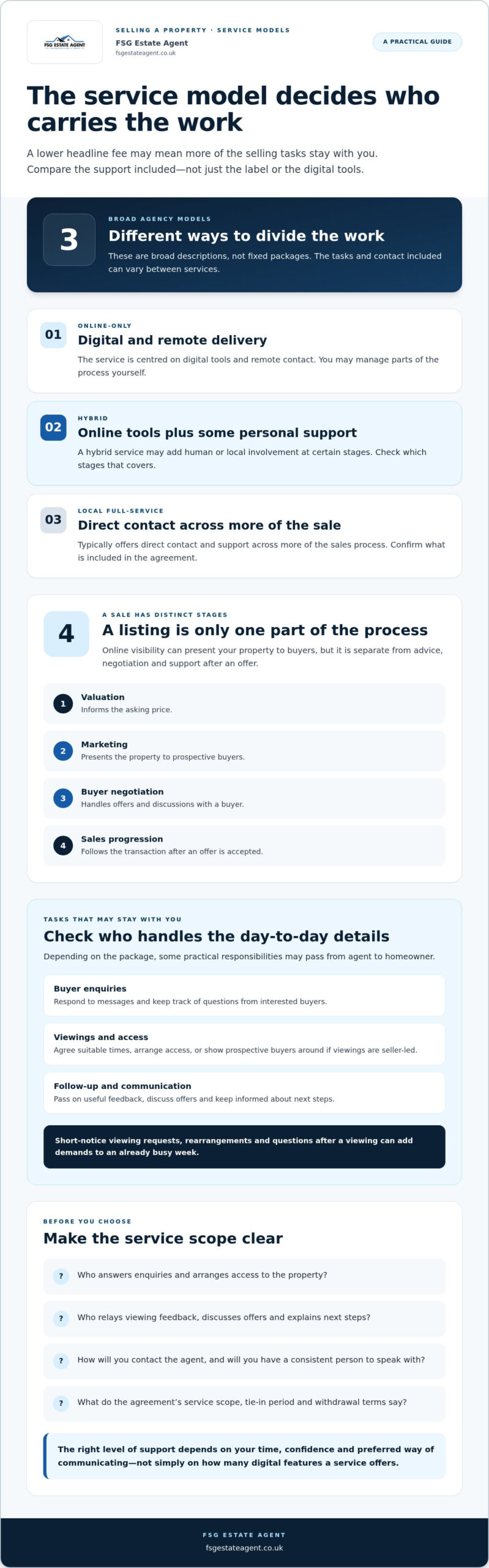
Depending on the package, you may need to respond to buyer enquiries, agree suitable viewing times and coordinate access to your home. Viewings may be seller-led, meaning you show prospective buyers around yourself, or the service may include someone attending. Hybrid packages can work differently again. Find out which tasks are included rather than assuming every online agent follows the same model.
Consider the smaller demands as well as the viewing itself. A buyer might ask to view at short notice, need to rearrange or have questions afterwards. You may need to keep track of messages and pass on useful feedback. If you’re juggling work or family commitments, these tasks can take more time than the listing process suggests. Before choosing a service, picture how you would handle an enquiry that arrives while you’re at work or a viewing request that needs access to be arranged.
When can communication and follow-up become a concern?
A property sale changes as interest develops, offers arrive and decisions need attention. Some sellers value having a familiar person to speak with who understands the property and their priorities. Others are happy using online updates or contacting a central team. Neither preference is wrong, but the contact arrangements can shape how supported you feel.
Separate help with preparing and publishing the listing from support after it goes live. Find out who will relay viewing feedback, discuss an offer and keep you informed about next steps. A service may provide strong initial listing support yet expect you to take more responsibility for ongoing contact. The terms and service scope should make that division clear.
Before committing, picture an ordinary week during the sale. Can you answer enquiries promptly, arrange access and follow up with interested buyers? Would you rather manage those details, or have a consistent person involved? Your answer is a useful measure of fit. The right level of support is the one that matches your time, confidence and preferred way of communicating, not simply the one with the most digital features.
Why online estate agent problems often come down to the service model
Online agents can give sellers a way to arrange a property sale through digital tools, often with less face-to-face contact. Hybrid agents combine online systems with some personal or local support. A local full-service agency typically offers direct contact and support across more of the sales process. These are broad descriptions, not fixed packages. What matters is the work and contact included in the service you choose.
That distinction helps explain the problems with online estate agents UK sellers sometimes report. A lower-interaction model may mean you take responsibility for certain practical tasks. It doesn’t automatically mean the service is poor; it means you need to understand where the agent’s role ends and yours begins. The arrangement can affect who discusses the asking price with you, responds to buyers, negotiates an offer or follows progress after it’s accepted.
What is the difference between online-only and hybrid estate agents?
An online-only service is centred on remote or digital delivery. You may manage parts of the process through online tools, with contact arranged remotely. A hybrid service also uses digital tools but may add human support, such as local involvement at certain stages. Packages differ, so neither label tells you exactly who handles each task or how you’ll speak with the agent.
Check the service as a whole, not just its technology. Portals such as Rightmove and Zoopla can help present a property to people searching online, but exposure is only one part of selling. It isn’t the same as tailored advice, negotiating with a buyer or keeping track of what happens after an offer. National Trading Standards has also highlighted misleading listing practices in its warning on ‘portal juggling’, a reminder that online visibility and a clear, dependable sales service are separate considerations.
Which parts of selling still need active management?
A property sale involves distinct stages. Valuation informs the asking price; marketing presents the home; buyer negotiation handles offers; and sales progression involves following the transaction after an offer is accepted. A listing can put a property in front of potential buyers, but it doesn’t, by itself, manage those decisions or follow-up. Agency progression is practical coordination, not conveyancing or legal advice.
Before choosing a model, map its support against those stages. Who discusses price and marketing with you? Who handles an offer? Who keeps communication moving once it’s accepted? The answers help reveal whether a package is mainly a listing service or includes broader agency support. Online listing and end-to-end agency support are not identical.
For sellers in Twickenham, Richmond and Chiswick who value direct personal contact, FSG is an independent residential sales agency founded by Fran. Fran works directly with clients from complimentary valuation and professional marketing through buyer negotiation and proactive sales progression. Explore personal property sale support to see how that approach keeps a person involved across the process.
Online versus local estate agents: compare the work, contact and support
Agency labels offer a starting point, not a full description of what you’ll receive. Online and hybrid services vary, and local agencies differ too. The comparison below shows common tendencies, not fixed rules. Use it to focus on practical questions: how much work stays with you, how easily you can speak to someone and what support continues after an offer.
| Area | Online or hybrid service | Local full-service agency |
|---|---|---|
| Seller workload | You may handle more administration, buyer contact or viewing arrangements, depending on the package. | An agent may take a more active role across the sale, with responsibilities set out in the service. |
| Personal contact | Contact may be mainly remote or through a central team; hybrid models can add local support. | You may have more direct contact with a local agent who knows your property and sale. |
| Viewings | Arranging or conducting viewings may fall to you, though some services include assistance. | The agent may coordinate or attend viewings, depending on the agreed service. |
| Progression support | Post-offer support can vary. The seller may need to take a more active role in follow-up. | Sales progression may include regular contact and practical follow-up after an offer. |
How does seller involvement differ between service models?
In some online packages, you coordinate access and answer buyer questions yourself. Hybrid services may provide help with selected tasks, while a local agency may offer more direct involvement. These are tendencies, not guarantees. Compare the specific tasks included and who handles them. A familiar agency label won’t tell you whether you’ll arrange viewings, relay feedback or speak directly with the person advising on your sale.
What support matters after a buyer makes an offer?
An accepted offer is a step forward, not completion. The sale still needs attention, communication and follow-up as the transaction progresses. Sales progression can help keep parties updated and surface practical issues, but it doesn’t replace the legal work handled through conveyancing. Find out what support continues after an offer and how updates are shared. Consistent contact can help you understand what’s happening, without guaranteeing that a sale will complete.
These differences help explain why the problems with online estate agents UK sellers encounter can depend on the service structure, rather than the online label alone. Compare the scope of support, not just the headline model or fee format. For a clearer picture of the stages and responsibilities involved, read this guide to residential property sales agents, which outlines what sellers can expect from end-to-end agency support.
How to decide whether an online estate agent suits your circumstances
There isn’t one right model for every seller. The useful question is whether the service fits the time, confidence and involvement you can offer throughout a sale. The problems with online estate agents UK sellers sometimes face can often be avoided by matching the service to their circumstances and understanding the responsibilities before signing.
Use these prompts to assess the fit:
- Time: Can you respond to buyer enquiries and coordinate access around work and other commitments?
- Viewings: Are you comfortable showing people around your home and answering questions in person?
- Communication: Do you prefer online updates, or regular one-to-one conversations with someone who knows your sale?
- Follow-up: Would you be happy keeping track of progress after an offer, particularly if your sale is part of a chain?
When might a more hands-on online service suit a seller?
An online or hybrid service may suit you if you have time to manage practical tasks, feel confident speaking with prospective buyers and are comfortable handling communication remotely. Digital processes can be convenient if you like organising details yourself. Treat that as a possible fit, not a given: packages differ. Look closely at which tasks are included and which ones you’ll take on.
When might direct, personal support matter more?
Direct support may matter more if your schedule is full, you’d rather not conduct viewings or you value speaking with the same person as the sale develops. Local knowledge can also help explain a home in its context and understand the buyers it may appeal to. FSG serves sellers in Twickenham, Richmond and Chiswick, with Fran working directly with clients through the sale.
Think beyond the moment an offer arrives. If there’s a chain, several parties need to keep moving through their own steps. You may appreciate practical follow-up and clear updates as the transaction progresses. That support doesn’t guarantee completion or replace conveyancing, but it can help you understand what’s happening and what needs attention. Consider how much responsibility you want to carry at this stage, not just how you want the property listed.
Before deciding, write down the tasks you’re willing to manage and the support you’d prefer from an agent. Then compare that list with the actual service terms, rather than relying on labels such as “online” or “local”. Sellers considering a local option can use this guide to choose an estate agent in Twickenham and think through what matters in a selling relationship.
If you’re looking for personal support with your sale, arrange a complimentary property valuation with FSG.
A personal estate agency alternative for sellers in Twickenham, Richmond and Chiswick
Online and hybrid agencies can suit sellers who are happy to manage parts of the process themselves. If you’d rather have direct, personal support, a local agency offers a different kind of relationship. FSG Estate Agent is an independent residential sales agency founded by Fran. Fran works directly with clients through the sale, offering a familiar point of contact rather than leaving you to navigate every stage alone.
That hands-on approach can help address the practical concerns behind the problems with online estate agents UK sellers consider, such as who to speak to and how responsibilities are shared. It isn’t about dismissing online services. It’s about choosing the level of involvement that feels right for your sale, with clear communication and support from valuation through to progression.
What does direct support from valuation to completion involve?
The process starts with a complimentary local valuation. An experienced property specialist assesses your home and helps guide pricing decisions. From there, professional marketing is prepared to showcase your property to prospective buyers. Each stage has a purpose: an informed starting point, a considered presentation and support as interest develops.
If a buyer makes an offer, buyer negotiation is part of the agency service. After an offer is accepted, proactive sales progression provides practical follow-up as the transaction moves towards completion. Fran’s direct involvement means you have personal support across these stages. Sales progression is not conveyancing, and it doesn’t guarantee a particular outcome or timescale. It is support with keeping the sale moving and helping you understand what is happening.
How can local sellers take a simple next step?
If you’re preparing to sell in Twickenham, Richmond or Chiswick, a valuation can help you understand your home’s position in the local market and inform decisions about timing, pricing and preparation. You don’t need to have every detail settled before starting a conversation. You can discuss your property and plans, then consider what kind of support suits you.
With FSG, Fran works directly with you, from the initial valuation and marketing through negotiation and sales progression. That gives you a clear person to speak with and a personal agency relationship throughout the process. If you’d like to explore your options without pressure, arrange a complimentary property valuation.
Choose the support that feels right for your sale
The right next step is to decide what you want your selling experience to feel like. If you’re comfortable managing parts of the process, an online service may suit you. If you’d value a direct relationship and more personal guidance, choose a service that makes those responsibilities clear from the start. Understanding the problems with online estate agents UK sellers may face is less about ruling out one model and more about knowing what support you want.
For homeowners in Twickenham, Richmond and Chiswick, FSG offers a personal approach, with Fran working directly with you through the sale. A complimentary, no-obligation valuation can help you consider your plans, while professional marketing and proactive sales progression provide support at key stages.
Take a simple first step and discuss your property with a local specialist. Arrange a complimentary property valuation and explore an approach that gives you clarity and confidence for the sale ahead.
Frequently Asked Questions
Are online estate agents a bad idea for selling a house in the UK?
No. An online estate agent can suit you if you’re comfortable managing parts of the sale and the service includes the support you need. Before instructing one, consider a typical week: could you respond to enquiries, make time for viewings and keep track of next steps? The problems with online estate agents UK sellers may encounter often arise when the agreed service doesn’t match their time, confidence or preferred level of contact.
What are the disadvantages of using an online estate agent?
Possible drawbacks include taking on more administration, having less direct contact or needing to arrange some services separately. The experience depends on the provider and package, so these aren’t automatic disadvantages of every online agency. For example, a seller comfortable managing appointments may welcome the extra involvement, whilst someone with a busy schedule may find it difficult. Consider the full service scope and any additional charges before deciding, rather than judging by the headline offer alone.
Do online estate agents arrange and conduct property viewings?
Some do, but viewing arrangements depend on the service you select. You may be expected to respond to requests, agree appointment times and show buyers around yourself; other packages may include viewing assistance. Think through practical details such as access, work commitments and who will collect feedback afterwards. If you’re not available during the day, seller-led viewings may be less convenient. Read the service terms so you know what happens from the first enquiry to the viewing follow-up.
Can I change estate agents if my online listing is not working?
You can consider changing agents, but first review the agreement you signed. Look for the tie-in period, notice requirements, withdrawal terms and any conditions linked to an offer or introduction. Ask your current agent to confirm in writing when the instruction ends and whether any charges may apply. Clarify these points before appointing another agent, so you understand your obligations and avoid uncertainty about which agency is responsible for a buyer.
Do online estate agents handle sales progression after an offer?
Some provide post-offer support, whilst others may expect the seller to manage more of the follow-up. Check what the service means by progression: for instance, whether it includes keeping you updated on outstanding steps or contacting parties involved in the chain. A conveyancer handles the legal work, while an agent’s progression support is not a substitute for it. Be clear about who you’ll contact for updates once an offer is accepted.
Are hybrid estate agents different from online estate agents?
Yes, generally: a hybrid model combines digital processes with some human or local support, while an online-only model is centred more fully on remote service. The distinction isn’t a guarantee of what’s included. One hybrid package might offer in-person help at selected stages, while another may rely mainly on remote contact. Compare the actual tasks, communication routes and support included, rather than assuming the word “hybrid” means a particular level of service.
Is a local estate agent better if I want personal support?
A local agent may be a better fit if you value direct conversation and someone who understands the area around your home. That can help you discuss local features, likely buyer interests and how to present the property. It isn’t automatically the right choice for everyone; the deciding factor is whether the agent’s approach matches your needs. Sellers in Twickenham, Richmond and Chiswick may value working with an agency focused on their local market.
What should I compare before choosing an online estate agent?
Compare the service in practical terms. Check who prepares the listing, handles buyer enquiries, arranges viewings, shares feedback and discusses offers. Then look at what happens after an offer, including the contact you’ll have during progression. Read the agreement for payment terms, any tie-in period and withdrawal conditions. A written breakdown of included tasks can make packages easier to compare and help you spot responsibilities you’d otherwise need to manage yourself.