A realistic asking price can make more difference to your timeline than a quick sale plan. A realistically priced Richmond property typically reaches an agreed sale within 4-6 weeks, whilst a traditional sale from listing to completion typically takes 12-16 weeks. That’s a useful starting point when selling a house in Richmond, but your property’s appeal, preparation and the buyer’s position also shape what happens next.
It’s natural to want a clear sense of timing before putting your home on the market. When selling a house in Richmond, buyer demand and neighbourhood factors can affect interest, while pricing and preparation shape the first impression your property makes.
The sale continues beyond an accepted offer. Conveyancing, buyer arrangements and sales progression can all influence the process, so understanding each stage helps you plan and make informed decisions.
Key Takeaways
- Set your asking price around realistic buyer expectations; an inflated launch price can cost valuable momentum.
- Use Richmond’s neighbourhood character to make your home stand out, while considering factors such as parking, conservation restrictions and river-related flood risk.
- Plan for the whole sale: a realistic price can help secure an agreed sale within 4-6 weeks, while a traditional sale from listing to completion typically takes 12-16 weeks.
- Prepare property information and paperwork early so conveyancing can progress with fewer avoidable delays.
- Focus viewings on a strong first impression: clear clutter, tidy the garden and let buyers see the home’s most appealing features.
Local buyer demand and neighbourhood factors
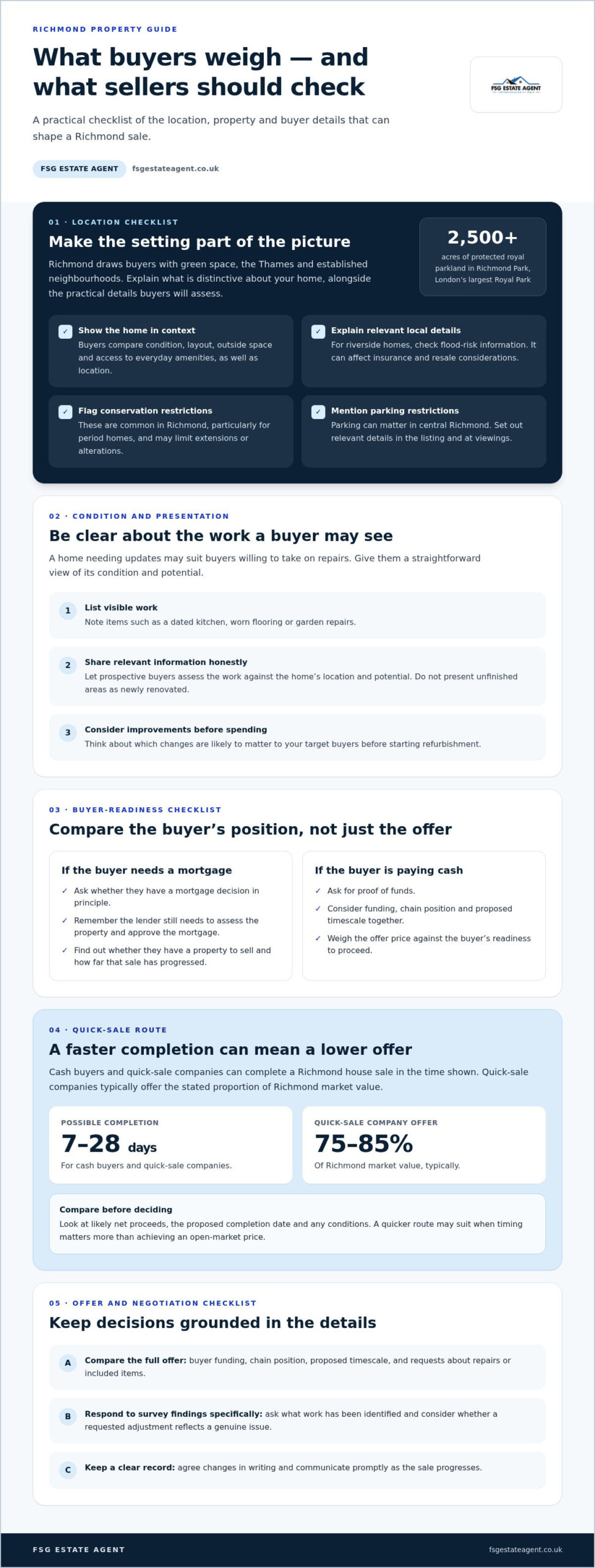
Richmond attracts buyers looking for homes near green space, the Thames and established neighbourhoods. Richmond Park, London’s largest Royal Park, covers over 2,500 acres of protected royal parkland. That setting can make nearby homes appealing, but buyers also compare condition, layout, outside space and access to everyday amenities. An excellent view or garden helps most when the asking price reflects the property’s overall condition and location.
Local details can shape a buyer’s decision. For a riverside home, check relevant flood-risk information, as this can affect insurance and resale considerations. Conservation-area restrictions are common in Richmond, particularly for period homes, and may limit extensions or alterations. Parking restrictions can also matter in central Richmond. Explain relevant details in the listing and at viewings so buyers can assess the property with realistic expectations.
A property that needs updating may appeal to buyers willing to take on repairs. Make a clear list of visible work, such as a dated kitchen, worn flooring or garden repairs. Share relevant information with prospective buyers and don’t present unfinished areas as newly renovated. Buyers can then weigh the work against the home’s location and potential. Before spending on refurbishment, consider which improvements are likely to matter to your target buyers.
Before accepting an offer, understand how the buyer plans to fund the purchase. A mortgage buyer may have a mortgage decision in principle, but the lender still needs to assess the property and approve the mortgage. Ask whether the buyer has a property to sell and how far that sale has progressed. For a cash buyer, ask for proof of funds. This helps you compare the offer price with the buyer’s readiness to proceed.
Cash buyers and quick-sale companies can complete a Richmond house sale in 7-28 days. Quick-sale companies typically offer 75-85% of Richmond market value. That faster route may appeal when timing matters more than achieving an open-market price. Compare the likely net proceeds, proposed completion date and conditions before deciding. A quick completion still depends on clear communication and the required sale steps being completed.
Negotiation involves more than the headline offer. Compare each buyer’s funding, chain position, proposed timescale and requests about repairs or included items. If a survey identifies work, ask for the specific findings and consider whether the request reflects a genuine issue. You can propose a revised price, agree to a reasonable adjustment or decline. Record any agreed changes in writing and keep communication prompt as the sale progresses.
Independent estate agency in Richmond
Estate agents vary in how they value, market and progress a Richmond sale. The right fit depends on your property, how involved you want to be and how clearly the agent explains each step.
An accepted offer can still fall through or be delayed by a buyer’s mortgage, survey or property chain. With an online estate agent, unclear responsibilities for viewings, offer handling and sales progression may leave you managing more of the process yourself.
Choosing a local estate agent
Look for an agent who can explain how Richmond’s neighbourhoods influence buyer interest. A period home near Richmond Green, for example, may appeal to different buyers from a flat near the station. Ask how they would present your property’s location, features and condition, and support viewings and negotiations. Clear answers help you compare the service, not just proposed asking prices.
Establish who will handle your sale day to day. A named point of contact makes it easier to discuss viewing feedback, buyer questions and next steps. Before choosing an agent, read the agency agreement carefully and clarify its duration, fee basis, any additional charges and how to end the instruction. This helps prevent misunderstandings later.
Traditional estate-agent sales
A traditional estate-agent sale commonly includes a valuation, marketing, arranging viewings, passing on offers and helping progress the transaction. Ask what the agent will handle and what you’ll need to manage. For example, agree who will respond to buyer questions after an offer and follow up with the parties involved as conveyancing progresses.
Compare the proposed marketing plan, not just the valuation. Check how the agent will describe your home, showcase its strongest features and share viewing feedback. A clear plan should explain the work involved from launch to completion, without suggesting that an asking price or accepted offer guarantees a completed sale.
Online estate agents may suit sellers who want to handle more tasks themselves. Services vary, so read the terms closely. Establish whether the quoted fee is payable upfront or after a sale, what marketing is included, and whether viewings and offer negotiations are handled for you. Consider how you’ll manage buyer enquiries and conveyancing updates if those tasks are your responsibility.
Whichever route you consider, compare written terms and practical support. Ask how viewing requests are arranged, when you’ll receive feedback and how offers are communicated. Find out whether the agent will discuss the buyer’s funding position and chain, then explain what happens after acceptance. This shows how the service works beyond the initial valuation.
A focused conversation with a local property sales specialist can help you assess how your Richmond home should be marketed and what support you’ll need through the sale.
How fast can I sell my house in Richmond?
Richmond prices vary sharply by property type, condition and location. Use sold prices to set realistic expectations, then compare them with current asking prices.
Comparing asking prices and sold prices
Asking prices reflect sellers’ expectations, not completed sale values. Compare them with completed sales, allowing for differences in size, condition and location.
Over the last year, Richmond flats sold for an average of £581,807. Terraced properties averaged £1,170,944, whilst semi-detached homes averaged £1,520,177. These figures are benchmarks, not valuations for an individual property. A well-presented home in Petersham may attract different interest from a similar-sized home elsewhere.
Reviewing Richmond house price trends
Richmond house prices were 12% below their 2023 peak of £1,145,784. Over the last year, house prices were similar to the previous year. These figures offer useful context, but they cover different time periods and shouldn’t be treated as a prediction for your sale. For a nearby comparison, explore the property market in Twickenham.
Check the property type and date behind each comparison. An average across flats, terraces and detached houses can hide important differences. For a more relevant picture, compare homes with similar accommodation, condition and location, then consider whether recent market movement supports your intended asking price.
Using sold-price benchmarks
The overall average house price in Richmond was £1,002,864 over the last year. In July 2026, the average sold price across Richmond, TW9 and TW10, was £803,249. These averages differ because their periods and coverage differ. Read the timeframe and property mix before using either figure to guide your pricing.
July 2026 averages by type were £1,814,548 for detached properties, £1,192,249 for semi-detached homes, £915,886 for terraced properties and £487,215 for flats and apartments. A detached home may differ considerably from another detached property. Floor area, condition, layout and exact street all influence how useful an average is.
For a practical comparison, gather recent sold examples with a similar property type and location. Note their condition and accommodation, then compare them with current asking prices. A flat on Richmond Hill and a family home in Petersham serve different buyers, even if their headline prices are close. Use the evidence to set a credible asking price and consider any gap between listed expectations and completed sales.
Preparing documents for conveyancing
Start gathering paperwork as soon as you decide to sell. An organised file helps your conveyancer answer questions about ownership, alterations and ongoing costs. For example, a buyer asking about a replaced boiler may need more than a verbal explanation. Keep relevant records together and note where any missing paperwork might be stored.
Begin with documents describing the property and your ownership. Locate title information, purchase paperwork and any plans you received when buying. If you own a leasehold home, gather the lease and recent correspondence about service charges, ground rent and building management. These details help your conveyancer respond to questions about the property’s arrangements.
- Alterations: Collect planning documents, building work records, completion paperwork and any guarantees for work such as a roof replacement.
- Heating and appliances: Bring together boiler servicing records, installation details and transferable warranties.
- Boundaries and access: Find plans, shared-drive arrangements and correspondence about fences or rights of way.
- Running costs: Gather recent council tax and utility information, plus service charge statements for a leasehold property.
Use these examples as a starting checklist, not a substitute for your conveyancer’s requests. A period home in Richmond may have records of older alterations, while a recently renovated flat may have documents from contractors and building managers. File each item alongside information about the relevant work. If a genuine guarantee names the installer, keep their contact details with it.
Complete information forms carefully and consistently. Check dates, names and descriptions against your paperwork before returning them. If you’re unsure whether a past repair counts as an alteration, describe what happened and when. Don’t guess. A clear note about a replaced window, for example, gives your conveyancer a useful starting point for follow-up questions.
Keep a log of enquiries once a buyer’s conveyancer starts asking questions. Record each question, the document supplied and the date sent. If the buyer asks about a shared access path, send the relevant plan and related correspondence together. This makes the exchange easier to follow and reduces the risk of sending conflicting versions.
For a leasehold home, request the management information early and organise the replies as they arrive. Buyers may ask about charges, planned works and building arrangements. Keep the latest statements and notices together, then pass them to your conveyancer promptly. For a freehold home, identify shared maintenance arrangements, such as a private road or communal entrance.
Before marketing, check that names and property details match across your records. Flag an old address, missing guarantee or unclear boundary document rather than leaving it unexplained. Preparing these items early gives your conveyancer a clearer picture and helps keep buyer enquiries moving during the sale.
Sale timelines and pricing strategy
Plan from valuation through marketing, offer, conveyancing and completion. In Richmond, a realistically priced property typically reaches an agreed sale within 4-6 weeks, while a traditional sale from listing to completion typically takes 12-16 weeks.
Planning the sale timeline
Start with a valuation, then agree an asking price and marketing plan. Prepare the property, launch the listing, arrange viewings and assess offers. After you accept an offer, conveyancing begins, enquiries are answered and the buyer’s arrangements progress towards exchange and completion. Keep your moving plans flexible, as an agreed sale is not the same as a completed one.
Setting a pricing strategy
Use comparable Richmond sales, your home’s condition and its strongest features to set an asking price. A figure that sits well above realistic value can weaken early buyer interest. A Richmond property priced 8-15% above realistic value can take 8-10 weeks to reach its first meaningful price reduction. Review viewing feedback and buyer responses before deciding whether to adjust.
Price also affects the time available to build momentum. A strong launch gives buyers a clear reason to view, whether you’re marketing a family home or an apartment. Agree a review point with your agent before the property goes live. At that point, consider viewing numbers, feedback and offer activity together rather than reacting to one isolated response.
For a traditional sale, allow for both the marketing period and the legal work after an offer. The 12-16-week timeframe from listing to completion includes more than finding a buyer. Mortgage arrangements, surveys, enquiries and the wider chain can influence progress. Responding promptly to questions and keeping documents organised can help prevent avoidable pauses.
There are other routes, but weigh speed against likely proceeds. Auction can offer a different route to selling, but its terms and timing should be weighed carefully. A Richmond auction sale typically achieves 90-95% of market value and typically completes 56 days after the bid. Compare those terms with your moving date, property and priorities before choosing a route.
Before setting your strategy, decide what matters most: a particular completion date, a target price or a balance between the two. Ask for a clear valuation and a realistic sale plan, then agree when you’ll review progress. You can request a free property valuation to discuss a starting price and next steps for your Richmond sale.
FSG Estate Agent: Property Sales Agency Service
FSG Estate Agent provides a Property Sales Agency Service for Richmond homeowners preparing to sell. Its Local Property Experts offer a Personal Service, from valuation and professional marketing through to sale progression. This support can help you set an asking price, present your home and keep the transaction moving.
Proactive Sales Progression helps maintain communication as the sale moves from an accepted offer towards completion. FSG Estate Agent supports you through the sales process, while conveyancing remains a separate legal step. A free property valuation gives you a starting point for discussing your home and sale plans.
If you’re considering a move, contact FSG Estate Agent to discuss selling your property.
Take the next step with a clear plan
Turn your preferred sale outcome into a practical plan. Before going to market, decide what matters most: the timing of your move, the price you need to achieve or how much preparation you can take on. This gives your valuation conversation a clear purpose and helps you weigh advice against your priorities.
Selling a house in Richmond is a significant decision, but you don’t have to plan every detail alone. FSG Estate Agent provides a Property Sales Agency Service, delivered by Local Property Experts with a Personal Service. Start with a conversation about your property, your plans and the support you want throughout the sale.
Contact FSG Estate Agent about your sale to talk through your next step. A clear conversation can help you move forward with confidence and a plan that suits you.
Frequently Asked Questions
How well does Richmond hold its value?
Richmond house prices were 12% below their 2023 peak of £1,145,784, while prices over the last year were similar to the previous year. That suggests recent stability, but not an unchanged value for every home. Flats, family houses and period properties attract different buyers. For your own plans, compare properties with similar size, condition and location rather than relying on the borough-wide average alone.
What documents do I need ready to sell quickly in Richmond?
Have ownership paperwork and documents about your property’s arrangements ready for your conveyancer. For a Richmond flat, this may include lease and management information; for a house, it could include records of shared access or past boundary discussions. Keep clear copies together and note any changes to your name or contact details. A short index helps you find the right document promptly when questions arise.
What are the average house prices in Richmond, London, and how do they vary by property type?
In July 2026, the average sold price across Richmond, TW9 and TW10, was £803,249. Averages by type were £1,814,548 for detached homes, £1,192,249 for semi-detached, £915,886 for terraced properties and £487,215 for flats and apartments. These figures cover Richmond, not London as a whole. They are broad benchmarks, so compare like-for-like homes before using them to shape expectations.
How long does it typically take to sell a house in Richmond?
A realistically priced Richmond property typically reaches an agreed sale within 4-6 weeks, while a traditional sale from listing to completion typically takes 12-16 weeks. The time after an offer depends on steps such as mortgage approval, survey enquiries and the buyer’s chain. Treat acceptance as progress, not as a completed move. Avoid committing to fixed moving arrangements until your conveyancer confirms the transaction’s position.
What legal costs and conveyancing fees should Richmond sellers budget for?
Ask a conveyancer for an itemised quote before instructing them. The total depends on the work involved, including whether the property is leasehold, title details need resolving, and administrative charges or disbursements apply. Ask which tasks are included and what could cost extra. For a leasehold flat in Richmond, clarify how the management information process is handled and billed.
What taxes may apply when selling a house in the UK, including Capital Gains Tax?
Capital Gains Tax may apply if selling a property creates a taxable gain, particularly for a second home or investment property. Whether tax applies depends on your ownership and circumstances. Keep purchase records, improvement invoices and documents showing sale-related costs together, as these may help establish the figures for your tax position. Tax treatment is personal, so base your return on your own circumstances.
How can I prepare and price my Richmond home to attract buyers?
Set a price using comparable sold homes, then make the viewing experience easy to understand. For a family property, leave a few signs of everyday living so buyers can picture their routines. Bring Richmond’s character into the presentation with local photographs, theatre tickets or activity leaflets. Keep the description specific to the home and area rather than relying on broad claims about what buyers want.
What local factors affect house sales in Richmond, such as schools, transport and conservation areas?
Buyers weigh location according to their own priorities, including commutes, school arrangements and daily transport needs. Richmond Park’s protected landscape may appeal to some, while conservation restrictions can affect changes to period homes. Parking in central Richmond can also shape a buyer’s view. For homes near the river, flood risk may influence insurance and resale considerations, so explain relevant property details clearly.