What makes an estate agent right for your sale: the valuation, the marketing or the support after an offer is accepted? When comparing estate agents Richmond sellers can trust, look beyond the headline price. You need an agent who can explain how they’ve arrived at their valuation, show how they’ll present your home and keep you informed as the sale progresses.
It’s understandable to worry that personal service might fade once you’ve signed, or that an accepted offer could lose momentum before completion. A clear plan and direct communication can make each stage easier to follow. At FSG Estate Agent, founder Fran works directly with clients, from a complimentary, no-obligation valuation through marketing and buyer negotiation to proactive sales progression.
This guide explains how to assess a Richmond estate agent’s local knowledge, compare marketing and communication, and prepare for a useful valuation conversation. It also sets out what to expect after an offer is accepted, so you can make an informed choice and feel supported from the first conversation through to completion.
Key Takeaways
- Ask how an agent’s knowledge of Richmond applies to your specific home, rather than relying on general claims about the area.
- Compare estate agents Richmond sellers are considering by asking for a clear explanation of valuation, marketing, communication, negotiation and sales progression.
- Prepare a short brief covering your property, priorities and preferred timing before discussing your sale.
- Use relevant current listings and completed-sale evidence to understand how an agent reaches a recommended asking price.
- Find out who will be your direct contact and what support they provide after an offer is accepted.
Choosing estate agents in Richmond: what matters when you sell?
Your decision is about more than what price to ask. You’re choosing who will represent your home, speak to prospective buyers and help keep the sale organised from valuation through to completion. A good agent should be able to explain what they recommend, why it suits your property and how they’ll keep you updated.
A Richmond address on an agent’s website or office sign doesn’t, by itself, show that their advice is relevant to your home. Search results can also mix up Richmond upon Thames with other places called Richmond, including Richmond in North Yorkshire and Richmond, Virginia. Be clear that you’re selling in south-west London, then compare the evidence behind an agent’s advice and the service they’ll provide. If you’re also considering agents in Twickenham or Chiswick, apply the same questions to each conversation.
Compare the practical details: the reasoning behind the valuation, how the property will be marketed, who you’ll speak to, how offers will be discussed and what happens after an offer is accepted. An estate agent’s role in the UK includes marketing and helping to progress a property sale. For a useful overview, see Understanding the role of an estate agent in the UK. Your own comparison should go further, to the support you can expect at each stage.
What should a Richmond seller expect from an estate agent?
Expect a clear route through the sale. It should start with a valuation and an explanation of how the asking price is assessed, then move into professional marketing and buyer enquiries. The agent should explain how offers will be communicated and negotiated, and what follow-up they provide as the sale progresses towards completion. They should also make clear where their role ends and your solicitor or conveyancer handles the legal work.
Effective marketing does more than announce that a property is for sale. It presents the home accurately, highlights features that matter and helps prospective buyers understand what’s on offer. Ask what the listing will include, how enquiries and viewing feedback will be passed on, and who will discuss offers with you. You should know who to contact when a buyer raises a question or you need to consider an offer, rather than being left unsure who is managing the conversation.
How does Richmond location knowledge help a sale?
Local familiarity is useful when it leads to specific, evidence-based advice. An agent should be able to discuss how your home’s layout, condition, outdoor space or transport links may matter to different prospective buyers, without assuming everyone has the same priorities. These are points to explore, not automatic claims about who will buy your property.
For example, an agent might explain which features could appeal to a particular audience, then support that view with relevant current listings or completed-sale evidence. Ask how closely those comparisons match your property in type, condition and location. A familiar street name can start a conversation, but it doesn’t prove that a suggested price or marketing plan is right for your home.
Look for advice that separates what the agent knows about the area from what the evidence says about your specific property. That distinction helps you compare estate agents Richmond sellers may be considering on more than confidence or a headline valuation. It gives you a clearer basis for choosing who will represent your home and manage the sale.
How to assess an estate agent’s Richmond market knowledge
Local knowledge is most useful when it leads to clear, property-specific advice. An agent should explain how your home’s type, setting, condition and individual features may shape its appeal, rather than relying on broad claims about Richmond’s popularity. The aim isn’t to predict exactly who will buy, but to identify plausible audiences and show how the marketing can speak to them.
What local knowledge should an agent be able to explain?
Ask how the agent’s understanding of the area informs their view of your property. A flat, a family house and a home with an unusual layout may each need a different explanation of their features. The agent should connect those details to possible buyer interests while recognising that people’s priorities vary.
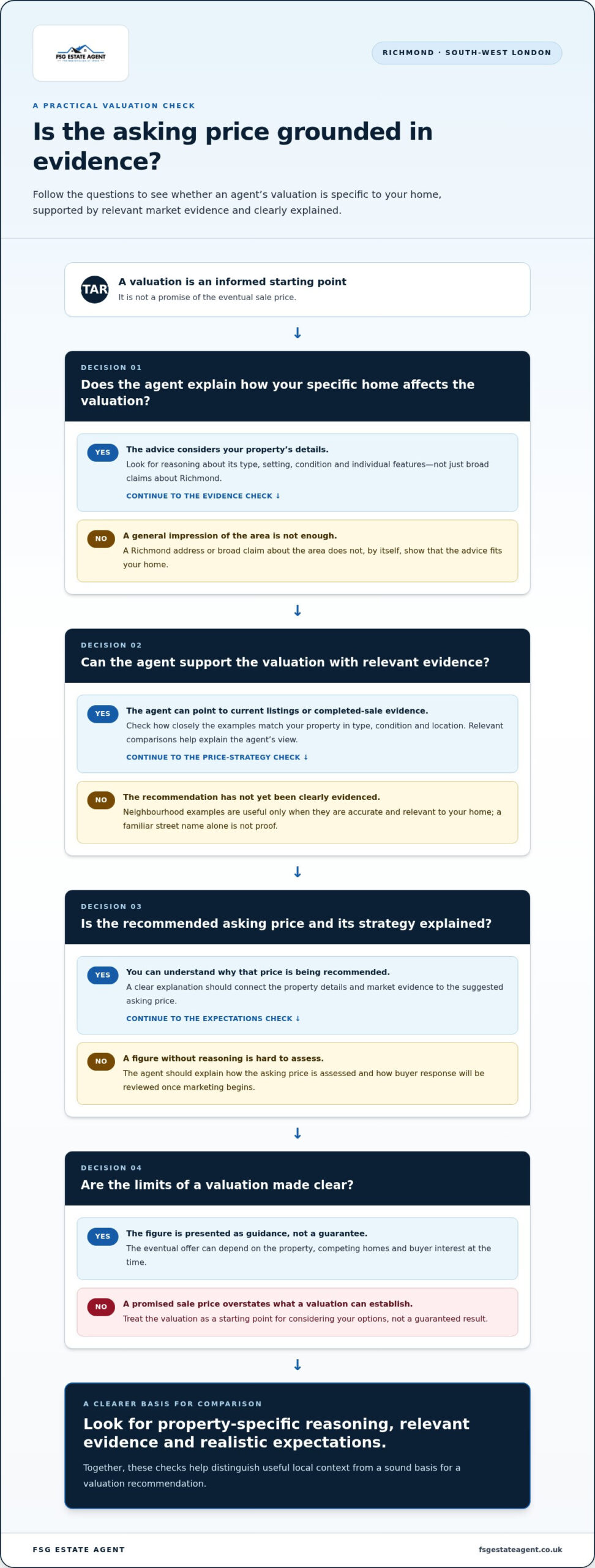
Neighbourhood examples can help, but only when they’re accurate and relevant. A general impression of an area isn’t the same as advice about your home. Look for reasoning grounded in current, verifiable listings or completed-sale evidence, and ask how the examples compare with your property in type, condition and setting. This helps you distinguish useful context from a sound basis for a recommendation.
How should a valuation connect to the Richmond market?
A valuation should be explained, not simply announced. The agent should discuss the features they’ve considered and the market evidence informing their view. Ask which comparisons are most relevant and where your property differs. If the proposed asking price reflects a particular strategy, you should understand why and how the agent plans to review buyer response once marketing begins.
A valuation is an informed starting point, not a promise of the eventual sale price. What a buyer is willing to offer can depend on the property, competing homes and buyer interest at the time. FSG Estate Agent provides a complimentary, no-obligation valuation to help you consider your options without treating an initial figure as a guaranteed result.
Useful local advice should also be clear about its limits. If the evidence is mixed, an agent can explain what the available comparisons show and what remains uncertain. That gives you a more realistic basis for deciding how to proceed than a confident figure without supporting detail. For a broader view of the responsibilities and stages involved, read this guide to what sellers should expect from a residential sales agent.
Professional conduct matters alongside market knowledge. RICS outlines expectations for property agency in its guidance on professional standards for estate agents. Use that as context when considering whether an agent’s advice feels clear, fair and properly explained. Among estate agents Richmond sellers compare, look for someone who can connect local evidence to your home and discuss the sale plan directly with you.
If you’re considering a sale, you can explore FSG’s residential sales service as part of your research.
Compare Richmond estate agents by service, communication and follow-through
A polished property listing matters, but it’s only one part of the service. Compare what happens before, during and after buyer interest: who stays in touch, how offers are discussed and who helps keep the sale progressing. This makes it easier to compare estate agents Richmond sellers are considering without relying on broad claims or unverified comparisons between businesses.
Personal service doesn’t have to mean limited exposure. Separate who looks after you from how your home is marketed. A direct relationship with the person handling your sale can sit alongside professional property marketing. Look for a clear explanation of both.
| Area | What to compare |
|---|---|
| Personal contact | Who will be your direct contact, and how will you receive updates? |
| Marketing | How will the listing present your home clearly and professionally to prospective buyers? |
| Negotiation | How will offers and buyer feedback be shared, and how will the agent help you consider your options? |
| Sales progression | What follow-up and communication can you expect after an offer is accepted? |
Use the table to compare what each service includes, not as a scorecard based on promises. A useful answer explains the process and identifies your point of contact. It doesn’t guarantee a particular number of viewings, offers or a sale price.
How can sellers compare marketing and buyer negotiation?
Check whether the listing describes the home accurately and makes its relevant features easy to understand. Professional marketing should present the property thoughtfully, rather than relying on a headline or a few attractive images to do all the work. Ask how viewing feedback and buyer interest will be shared, and how the agent will explain an offer’s terms so you can make an informed decision.
Negotiation isn’t simply passing on a figure. You should understand what has been offered and have a clear conversation about your response. The agent can support negotiations, but the decision to accept or decline remains yours. No marketing plan can promise a specific outcome.
Why does sales progression matter after an offer?
An accepted offer is an important step, but it isn’t the same as completion. The sale still needs to progress through the next stages, including legal work handled by the buyer’s and seller’s conveyancers. Your agent should keep communication clear, follow up on progress and help you understand what’s happening and what comes next, without presenting that support as conveyancing. For a practical overview of selling a house in Richmond and the stages from offer to completion, see this seller’s guide.
Direct contact can be useful when questions arise or progress slows. For another local perspective on choosing representation, see this Twickenham guide to choosing an estate agent. Use the same core comparison: clear marketing, straightforward offer discussions, a named point of contact and attentive follow-through.
Prepare for a Richmond agent conversation with a clear selling brief
A useful conversation starts with your priorities, not a stack of paperwork. You don’t need every detail worked out before speaking to an agent. A short brief helps them understand what matters to you and shape their advice around your property and circumstances. It also gives you a practical way to compare estate agents Richmond sellers are considering.
Use this simple sequence to prepare:
- Establish your priorities. Decide what matters most: a particular timescale, a preferred moving date or how you’d like decisions and updates handled.
- Gather property details. Note the home’s key features, improvements and anything that could affect its presentation or how prospective buyers understand it.
- Discuss timing. Share your preferred sale window and any circumstances that might affect it, such as coordinating a move or working around other commitments.
- Review the plan. Consider how the agent proposes to approach valuation, marketing, buyer negotiation and sales progression, and who will communicate with you at each stage.
Be candid about your situation. If your timing is flexible, say so. If you have a date in mind or practical constraints, explain those too. Clear expectations help an agent make recommendations that fit your needs rather than assuming every seller has the same priorities.
What information helps shape a selling plan?
Focus on details that could influence how the property is valued or presented. Mention improvements, distinctive features and practical considerations affecting access or presentation. You don’t need to create a formal inventory. Accurate, relevant information gives a local specialist a stronger basis for discussing your home’s position and how its features could be communicated to prospective buyers.
Your priorities matter just as much as the property details. Explain what a successful move looks like for you and what could make the process more complicated. That context helps the agent tailor their advice, including how to present the home and what timing may be realistic to discuss.
How should sellers assess the proposed next steps?
Look for an explanation you can follow. The agent should set out how the valuation informs the proposed approach, how professional marketing will present your home, how buyer interest and offers will be discussed, and how sales progression will be managed after an offer. The valuation is a starting point for discussion, not a promised sale result.
Clarity about responsibility matters too. You should understand who your direct contact is, how updates will be shared and what support the agent provides as the sale moves forward. The legal work remains with your conveyancer, so the roles should be easy to distinguish. If any part of the proposed plan feels unclear, ask for it to be explained in plain English before deciding how to proceed.
Fran works directly with clients throughout the sale, helping keep communication personal and accountable. If you’re preparing to sell in Richmond, discuss your sale with FSG Estate Agent and use the conversation to explore a clear, considered starting plan.
How FSG Estate Agent supports Richmond sellers from valuation to completion
Selling a home involves a series of decisions, and you deserve to understand what’s happening at each stage. At FSG Estate Agent, founder Fran works directly with clients throughout their residential sale. You have a clear point of contact for advice, questions and decisions, rather than being passed between people who may not know your plans.
For sellers comparing estate agents Richmond homeowners may consider, the important question is how that personal contact supports the work itself. It means clear conversations about your sale and proactive attention to its progress. It isn’t a promise of a particular offer, sale price or completion date. Every sale depends on its own circumstances.
What does FSG’s personal sales support involve?
The process can begin with a complimentary, no-obligation valuation. It gives you an informed starting point for discussing your home and plans, not a guaranteed sale result. From there, professional property marketing presents your home to prospective buyers, with advice shaped around its features and your priorities.
As interest develops, buyer negotiation helps you understand offers and consider your response. Fran’s direct involvement means you can discuss the advice with the person working with you. You remain in control of decisions, with the reasoning explained in straightforward terms.
Once an offer is accepted, the sale still has steps to complete. Proactive sales progression helps keep communication and follow-up moving through to completion. Fran can help you understand progress and what to expect next. The legal work is handled by your conveyancer, not by the estate agent. Keeping those roles clear helps you know who is responsible for each part of the transaction.
Personal service should also leave room for your circumstances. Your preferred timing, priorities and questions can inform discussions about marketing and offers. There’s no one-size-fits-all script. Direct contact makes it easier to talk through what matters to you as the sale unfolds, without suggesting that an agent can control every factor involved.
What is a useful next step for Richmond homeowners?
If you’re considering a move, an initial conversation can help you set out your plans and understand the next steps. A complimentary, no-obligation valuation gives you the chance to discuss your property with a local specialist and consider an informed view of its position. It’s a starting point, not an obligation to proceed or a promise of what a buyer will pay.
Explain what you’re hoping to achieve, ask about the proposed approach and decide whether it feels right for you. You don’t need to have every detail settled before you begin.
Arrange a complimentary, no-obligation Richmond valuation and start a straightforward conversation with Fran about your home and selling plans.
Take the next step with confidence
Choosing an estate agent is also choosing how you want to experience your sale. Think about the communication that will help you make decisions and the involvement you want as the process moves forward. A useful conversation can turn those preferences into a clear starting plan.
At FSG Estate Agent, Fran works directly with you throughout the sale. A complimentary, no-obligation valuation gives you room to consider your options, while professional marketing, buyer negotiation and proactive sales progression support the journey through to completion. These steps help keep the process connected without promising a particular outcome.
If you’re weighing up estate agents Richmond sellers can work with, start with an open discussion about your home and plans. There’s no pressure to have every decision made today. Arrange a complimentary, no-obligation Richmond valuation and take a considered first step towards your move. Your next chapter can begin with a clear plan and personal support.
Frequently Asked Questions
How do I choose an estate agent in Richmond?
Choose an agent whose advice is clear, relevant to your home and easy to act on. Ask how they reached their view of the property, who you’ll deal with directly and how they’ll keep you updated. You could describe a feature that matters to you, such as a particular room or outdoor space, and ask how it might shape the marketing plan. Clear reasoning is more useful than a confident promise.
Is a local estate agent better for selling a home in Richmond?
A local agent can bring useful context, but local knowledge alone isn’t enough. What matters is whether they can apply it to your specific home and support their advice with relevant evidence. For example, they might discuss how a property’s layout or setting could interest different buyers, then explain the thinking behind that view. Consider the service as a whole too: personal communication and consistent follow-up matter alongside familiarity with Richmond.
How much is my house worth in Richmond?
There isn’t one figure that applies to every Richmond home. Condition, layout, individual features and current market evidence all contribute to an agent’s valuation. FSG Estate Agent offers complimentary, no-obligation valuations, giving you an opportunity to hear an informed view and discuss your options. A valuation helps guide a selling decision, but it can’t guarantee what a buyer will offer or the final sale price.
What happens after an estate agent accepts an offer?
The seller decides whether to accept an offer; the estate agent communicates and supports the process. Acceptance doesn’t mean the sale is complete. The transaction continues through further steps towards completion, while the parties’ conveyancers handle the legal work. Your agent can help keep communication moving and explain what progress has been reported, so you’re not left guessing about the next stage.
Can I use an estate agent who works across Richmond and Twickenham?
Yes. An agent can serve nearby areas and still give advice tailored to your property’s location. The important thing is that they understand the specific home and can explain how its setting and features inform their approach. FSG Estate Agent serves Richmond, Twickenham and Chiswick, with founder Fran working directly with clients. Sellers across these areas have a personal point of contact for their residential sale.
What should I prepare before speaking to a Richmond estate agent?
Prepare a few notes rather than trying to assemble a perfect file. Include what you hope to achieve, your preferred timing and any practical commitments that could affect a move. Jot down property features or improvements that may not be obvious during a first visit. You can also note questions about communication or next steps. This gives the conversation a useful focus without requiring every decision to be settled in advance.