A local property valuation in Richmond, Twickenham or Chiswick should be based on sales of comparable nearby homes, with differences in size, layout, condition and position taken into account. A professional valuation brings this evidence together with features that may influence buyer interest, giving you a reasoned estimate of a likely sale price. It is an estimate, not a promise of what a buyer will pay.
It’s natural to want one clear figure, but a useful estimate involves more than a quick look at similar homes. Differences between streets, property features and presentation can all affect how closely a sale compares with yours.
This guide explains how local sales inform an estimate, which property features matter and what a professional valuation adds. You’ll have a clearer way to judge whether a suggested price fits your home and the Richmond, Twickenham or Chiswick market.
Key Takeaways
- Judge a suggested sale price against several comparable local sales, not a single nearby listing.
- Compare homes by location, size, layout, condition and buyer appeal to understand where differences matter.
- Use completed sales as evidence, while remembering that asking prices show what sellers hope to achieve.
- A professional valuation can bring local market knowledge and your property’s specific features into one considered estimate.
- When you’re ready to sell, FSG Estate Agent’s personal sales service can guide you from valuation through to sale progression.
Assessing whether a valuation reflects a likely sale price
A likely sale price is estimated from relevant evidence, not simply copied from an asking price. In Richmond, Twickenham and Chiswick, an estimate should reflect both the property’s features and local market conditions.
Estimating a property’s market value
Market value is an informed estimate of the price a property could achieve in a sale. It gives you a basis for assessing an asking price and planning your sale.
For a Richmond home, an estimate can draw on completed sales of comparable properties, then account for differences such as layout, condition and position. A Twickenham flat with outdoor space, for example, may not be comparable to a similar flat without it. Each comparison should have a clear reason for inclusion.
How is a property’s value estimated in the UK? An estimate considers comparable sales, the property’s features and current local conditions. The result is a reasoned guide, not a confirmed offer from a buyer.
Keep the purpose clear. A sale estimate is different from a council tax band or a lender’s mortgage valuation. These assessments answer different questions, so they may not directly indicate an achievable sale price in Richmond, Twickenham or Chiswick.
Accuracy of online valuation tools
Online valuation tools generate estimates using property information and market data. They can provide a useful starting point, but their accuracy depends on how well that information reflects the individual home.
How accurate are online property valuation tools? Their estimates can differ from a property-specific assessment because a tool cannot see details such as a refurbished interior, unusual layout or repairs needed. Compare the result with completed sales of similar homes, then identify differences the tool may not capture.
For example, an online estimate for a Twickenham terrace may not account for an extension or a poor state of repair. Check that the recorded property details are accurate, including its type and room layout. Treat the result as one piece of evidence, not as your final asking price.
Challenging an inaccurate valuation
Challenging an assessment means presenting evidence to explain why its figure or details appear inaccurate. This matters when a council tax band or mortgage valuation seems inconsistent with the property or relevant comparisons.
How can I challenge an inaccurate council tax band or mortgage valuation? For a council tax band, contact the Valuation Office Agency with your reasons and supporting evidence. For a mortgage valuation, raise the concern with the lender and identify specific errors or relevant comparable sales.
Keep your case precise. Point out a factual issue, such as an incorrect room count, or explain why a comparison differs in property type or condition. A lender may have its own process for reviewing a valuation, so provide clear evidence through the lender handling the application. A specific, documented concern gives more context than disagreement with the figure alone.
Comparing similar property sales
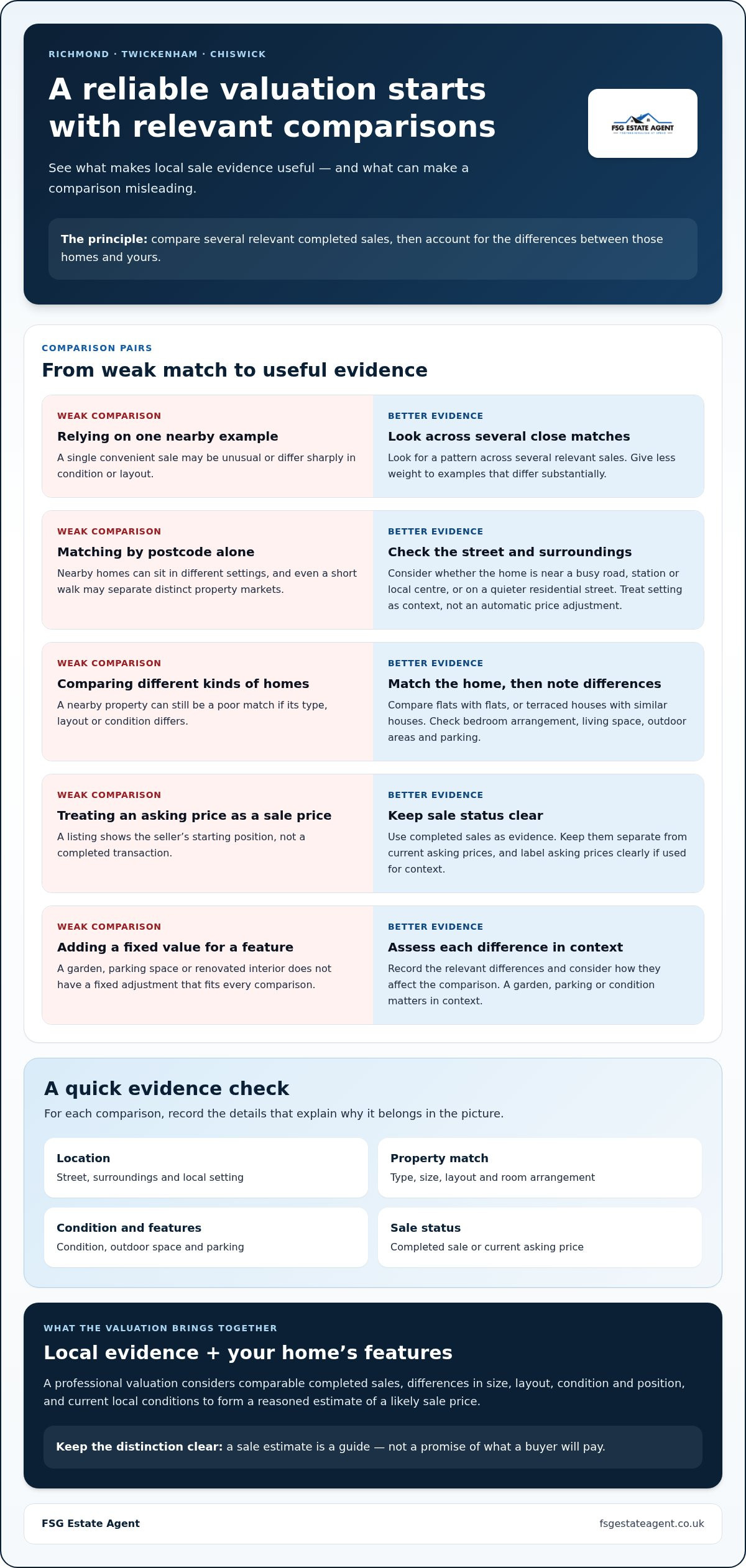
A useful comparison involves properties that share more than a postcode. In Richmond, Twickenham and Chiswick, match the home’s type, layout and setting before assessing sale evidence. A local property valuation is more meaningful when its comparisons reflect the homes buyers might consider alongside yours.
Comparing similar properties
Similar properties share features that make their sale prices useful points of reference. A nearby home may still be a poor match if its layout, condition or type differs.
Start with the same broad category: compare a flat with flats, or a terraced house with similar houses. Then consider bedroom arrangement, living space, outdoor areas and parking. For example, a two-bedroom flat with a private garden may not closely match one without outdoor space. Note each difference rather than treating the addresses as interchangeable.
Use several close matches rather than relying on one convenient example. Give less weight to a sale that differs sharply in condition or layout. Look for a pattern across the examples, then consider whether it fits your property. This makes your reasoning clearer and helps prevent an unusual sale from carrying too much weight.
Comparing nearby properties
Nearby comparisons are homes in the same local setting, chosen for relevance rather than distance alone. They help establish local context, but even a short walk can separate distinct property markets.
Compare streets and surroundings as well as postcodes. A home near a busy road, station or local centre may attract different interest from one on a quieter residential street. Treat these details as context, not automatic premiums or discounts. The individual property and its sale evidence still matter.
Keep the search within the area where buyers might realistically consider similar homes. If an example is across a boundary or has a notably different setting, explain why it remains relevant. A map can reveal clusters, but it cannot explain every difference between streets.
Record each comparison’s street, property type, sale status and relevant differences. Keep completed sales separate from current asking prices. An asking price reflects a seller’s starting position, not a completed transaction. If you use asking prices for context, label them clearly rather than treating them as confirmed sale values.
Review each example against your home. Ask whether it shares the same type, condition and setting. Identify the differences and consider how they affect its relevance. Don’t adjust figures mechanically: a garden, parking space or renovated interior matters in context, not as a fixed addition.
A second local property valuation can help you interpret the comparisons and their relevance to your home. A free property valuation can add a local assessment to the evidence you’ve gathered.
Checking recent local property sales
Recent completed sales show what buyers have actually paid, making them useful evidence for homes in Richmond, Twickenham and Chiswick. For a local property valuation, check both the sale date and the property details. A transaction from a different market period may offer less relevant context than a closely matched sale completed under current conditions.
Start by finding completed sales near your home. Record the street, property type, transaction date and recorded price. Keep homes listed for sale separate from completed transactions. An asking price reflects the seller’s initial position, not the amount ultimately paid. This distinction matters when judging whether local evidence supports a likely sale price.
Then consider when each transaction took place. An earlier sale may reflect different buyer demand or a different choice of homes for sale. Don’t treat every recorded figure as equally current. Note whether the evidence comes from the same period and whether conditions may have changed since the transaction.
Property records have limits. A recorded sale price may not describe the home’s interior, repairs, outlook or improvements. For example, two nearby flats may have similar recorded prices, but one may have a renovated interior or private outdoor space. Keep these distinctions in view when deciding how much weight to give each sale.
Build a short timeline of relevant transactions. Group examples by property type and setting, then see whether the evidence points in a consistent direction. If a sale stands apart, look for a reason before giving it much weight. Differences in condition, layout or immediate surroundings may explain why it offers limited guidance for your home.
Local conditions also shape what the evidence means. Buyer interest, the number of comparable homes available and the features attracting attention can influence an estimate. A local property valuation should reflect this context rather than assume older sales represent today’s market. Consider whether current listings give buyers more choice than they had when a comparison sold.
Beside each sale, note why it belongs in your review. Record the transaction date, location and any known features that affect its relevance. This makes the evidence easier to revisit if new sales appear and helps distinguish a useful comparison from one that only looks similar on a map.
Use the sales record as evidence, not as a price formula. If recent examples vary, check whether they genuinely match your property before drawing a conclusion. The clearest estimate comes from understanding why each sale is relevant, what differs and how the local market has changed since completion.
If recent examples are available, compare them with the wider evidence before drawing conclusions. In Ireland, property owners should use a number of relevant local sales to help value their property for Local Property Tax. Irish homeowners are advised to check how much Local Property Tax they would pay at their valuation or at other valuation bands.
The Northern Ireland Valuation List service lets users check valuation details, nearby properties in the postcode area and the full annual rate calculation for the current rating year. Keep this information separate from sale evidence when reviewing a likely value.
Considering property size, rooms, condition and position
A valuation depends on more than a property’s postcode. In Richmond, Twickenham and Chiswick, size, room layout, condition and position help explain how your home compares with others.
Property size, rooms and condition
Size, room arrangement and condition describe how much usable space a home offers and how ready it is for buyers. These details matter because two homes with similar bedroom counts can feel quite different. A well-maintained two-bedroom flat, for example, may compare differently with one needing substantial repairs or having an awkward layout.
Describe rooms by their use, not just their count. A dining room used as a home office still has different features from a bedroom. Note practical details such as storage, natural light and how comfortably living areas connect. These points help distinguish a compact Richmond terrace from a larger home with a similar room count.
Describe condition clearly and fairly. List completed improvements, such as a modernised bathroom, alongside visible work, such as worn flooring or dated fittings. Don’t confuse decoration with structural condition. A fresh coat of paint may improve presentation, but it does not change the home’s underlying layout or available space.
Position adds another layer. A Twickenham home facing a busy road may feel different from a similar property on a quieter street. Consider outlook, privacy, access and the immediate surroundings. These details can help explain why nearby homes with similar sizes and room counts attract different levels of interest.
Information to prepare for a valuation
Before requesting a property valuation, prepare a clear description of the home, its rooms, size, condition, improvements and position. Specific details help the assessment reflect your property rather than a broad category. Include, for instance, a two-bedroom flat’s outdoor space or a house’s recent kitchen upgrade.
Gather the details in one place. Include:
- Property type, approximate size and room arrangement.
- Recent renovations, with the areas and work completed.
- Repairs or unfinished work that could affect condition.
- Outdoor space, parking, outlook and notable surroundings.
How should you prepare before requesting a valuation? Write down the property’s room layout, improvements, condition and position, then note features that might not be obvious during a brief visit. For example, explain whether a spare room serves as an office or whether the home has a garden.
Keep descriptions factual. If a room has a particular use, clarify its layout rather than assuming that use changes its category. If renovation work is unfinished, state what is complete and what remains. Clear information helps a valuation account for the details that distinguish your Richmond, Twickenham or Chiswick home.
For an Irish Local Property Tax valuation, homeowners are advised to consider size, number of rooms, condition, positioning and orientation. Keep these factors in view when preparing a property description, alongside the other details already gathered.
Professional property valuations
A professional valuation applies local market knowledge to your property’s features and likely sale prospects. The right type depends on whether you’re planning a sale or need an independent assessment for another purpose.
Estate agent and surveyor valuations
An estate agent estimates a likely selling price using local sales evidence and the property’s appeal to buyers. A RICS surveyor valuation is an independent professional assessment, often commissioned for a defined purpose. The distinction matters: a seller considering an asking price needs market context, whilst a lender or legal process may require a surveyor’s report.
What is the difference between an estate agent valuation and a RICS surveyor valuation? An agent focuses on likely sale price and buyer demand. A RICS surveyor provides an independent valuation for the purpose agreed for the instruction.
Free estate agent valuations
Estate agents provide free property valuations by reviewing the home, considering comparable sales and discussing its features with you. This gives sellers a view of likely market interest before they decide to sell. For example, an agent can consider how a renovated kitchen or garden affects comparisons with similar local homes.
How do estate agents provide free property valuations? They assess the property and local evidence, then explain a suggested price in a sales discussion. Ask how the figure relates to the home’s condition, layout and comparable sales. Clear reasoning helps you judge the estimate rather than rely on the number alone.
Which websites provide UK property valuation estimates? Property portals and estate agency websites offer online estimate tools. They use available property details and market information to generate an indicative figure, rather than inspecting the home. An estimate for a Twickenham flat, for instance, may not account for its outlook, interior condition or parking.
A professional appointment adds direct observation to the market evidence. The valuer can see whether a room’s layout differs from similar homes or whether improvements are likely to influence buyer interest. Share accurate details about renovations and repairs, then ask which comparisons support the estimate. This gives you concrete evidence to weigh against online figures.
Before agreeing an asking price, separate the estimate from the decision to sell. Consider your timescale, the property’s presentation and the expected interest in comparable homes. A Richmond house needing repairs may call for a different approach from a nearby home ready to move into. Understanding the reasoning behind the price helps you decide whether it fits your plans.
Use a professional assessment when you need a property-specific view, rather than a broad online indication. To discuss your home’s likely sale price, arrange a local valuation.
FSG Estate Agent: Property Sales Agency Service
FSG Estate Agent offers a Property Sales Agency Service for homeowners preparing to sell in Richmond and Twickenham. Its Local Property Experts provide a personal service, from valuation through to completion. If you’re weighing local sales evidence and want support with the next steps, this gives you a single sales-focused point of contact.
Professional property marketing helps present your home to potential buyers, whilst proactive sales progression manages the transaction after an offer. The service suits sellers who want help managing the sale, rather than simply an estimate for another purpose.
If you’re considering a sale, contact FSG Estate Agent or visit fsgestateagent.co.uk to discuss your property.
Make your next move with a clear plan
A local property valuation is most useful when it helps you decide what to do next. Before setting an asking price, consider your preferred timing, any preparation your home needs and how you’ll respond to buyer feedback. These choices shape your selling plan, so make them deliberately rather than treating the estimate as a decision on its own.
If you’re ready to explore a sale, FSG Estate Agent can discuss your property and the support you need. A clear conversation can help you decide whether now is the right time to move forward and what you want from the process. You don’t need to have every detail settled before getting started.
Contact FSG Estate Agent to discuss your next step. A considered plan can make the way ahead feel more manageable.
Frequently Asked Questions
What factors affect local property values?
Local demand, the number of comparable homes for sale and a property’s particular features all influence its likely value. In Richmond, Twickenham and Chiswick, buyer interest may differ between property types and locations. A home’s outlook, access, privacy and current condition can also affect its appeal. Consider how these features work together rather than assuming one improvement or location detail determines the whole sale price.
How much does a professional property valuation cost in the UK?
The cost depends on the valuation’s purpose, the property and the work required. FSG Estate Agent provides a free, no-obligation market valuation for homeowners considering a residential sale in Twickenham, Richmond or Chiswick. It is different from commissioning a formal independent surveyor’s report. For that work, the fee depends on the case and is provided after a quote request, based on factors such as the property and required scope.